In January 2026, Dr Lin Wu and M.Sc. Tian Zhang from the Institute of Subsurface Energy Systems at Clausthal University of Technology (CUT) visited the Institute of Geotechnical Engineering at BOKU University as part of the LOC3G project. During their stay at BOKU, Prof. Wei Wu, head of the institute and coordinator of LOC3G, organized a seminar to strengthen research exchanges between CUT and BOKU.

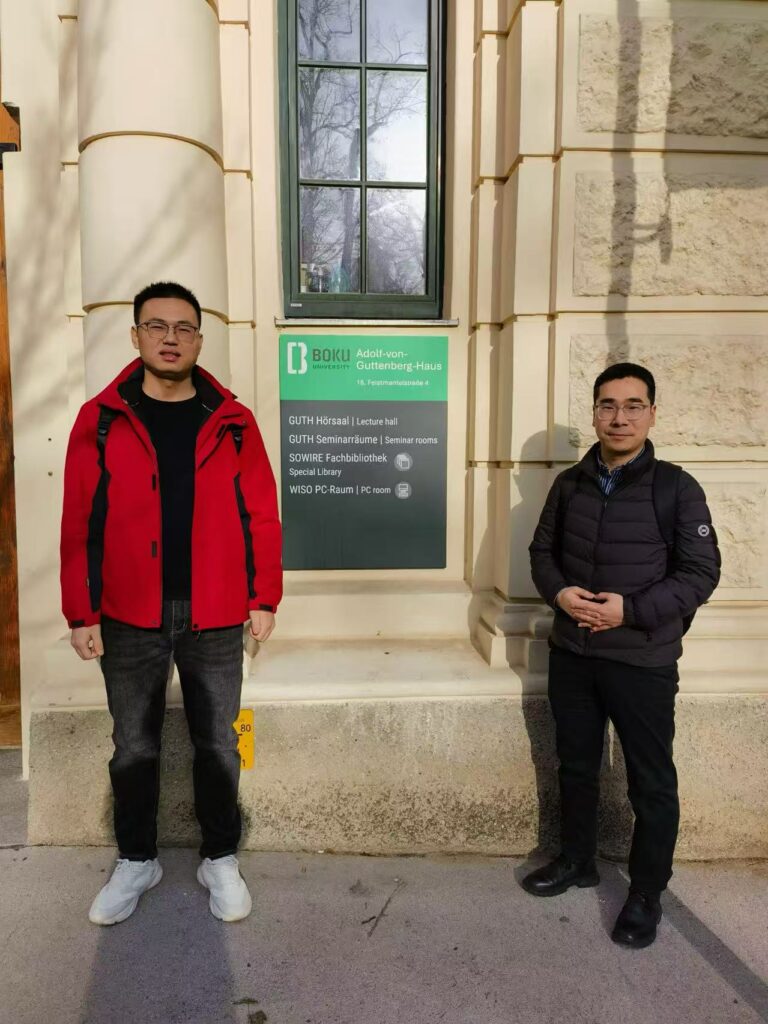
Photo with Prof. Wei Wu
Photo of two visitors in BOKU
Dr Lin Wu presented an integrated research framework on multifunctional underground bio-methanation (UBM) within the CCCUS concept (Carbon Capture, Circular Utilization and Sequestration). He outlined how depleted oil and gas reservoirs can be used for large-scale underground energy storage and renewable methane production in response to rising energy-related CO₂ emissions. His talk combined high-temperature, high-pressure conversion experiments with native methanogenic microbes, reactive-transport modelling of cyclic UBM, and data-driven approaches to site selection and CO₂ conversion prediction, highlighting the key role of coupled gas–water–rock–microbe interactions in system performance.


Dr. Wu Lin’ s Presentation
M.Sc. Tian Zhang reported on finite element (FE) modelling of the nonlinear cyclic behaviour of concrete structures based on the concrete damaged plasticity (CDP) model in ABAQUS. He explained how fracture-energy-based tensile and compressive laws, together with improved damage and stiffness-recovery descriptions, can better capture strength degradation and hysteresis under cyclic loading. The presentation also showed that the calibrated CDP model can realistically reproduce the global response and damage patterns of reinforced-concrete frames subjected to cyclic actions.
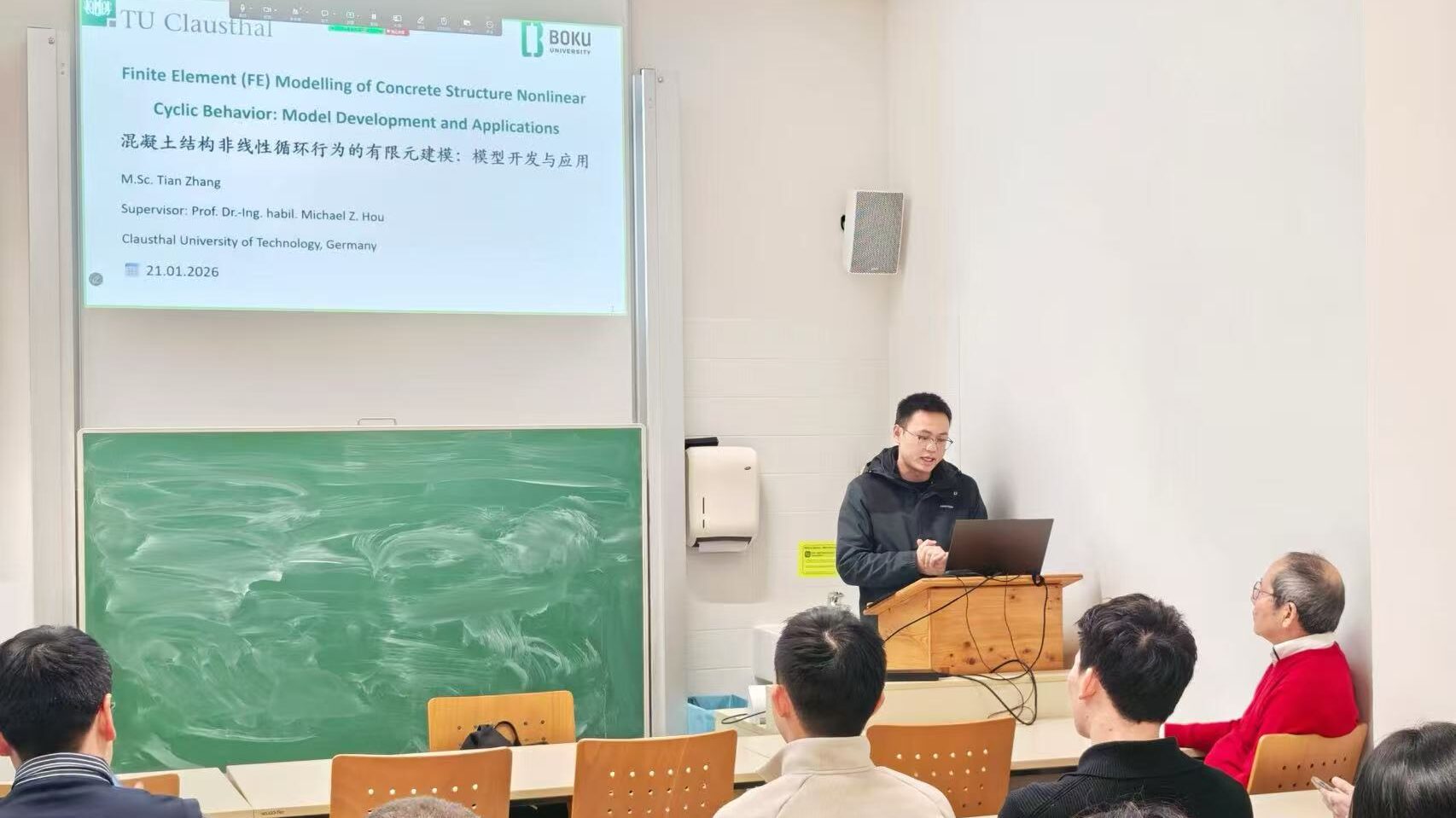


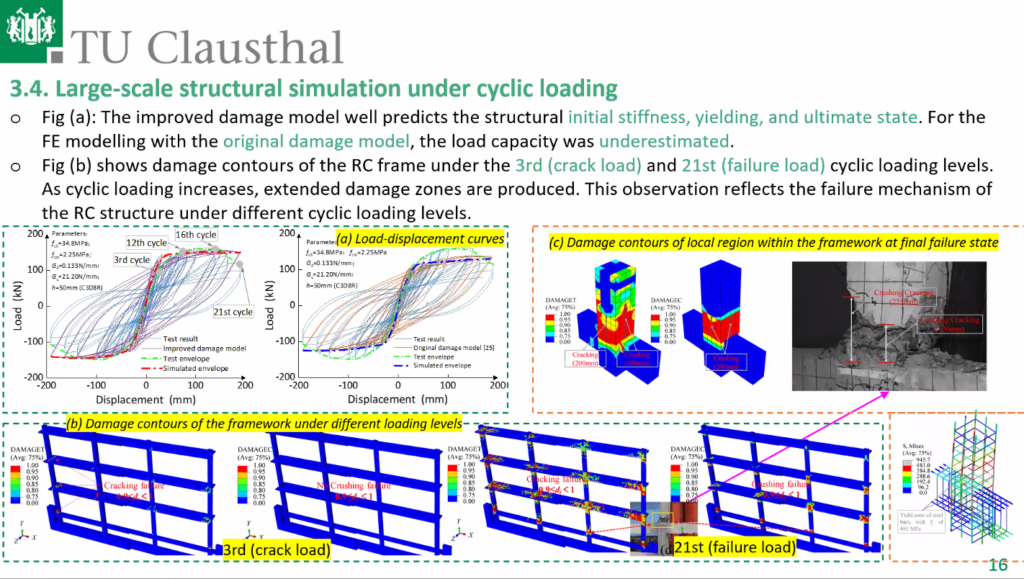
M. Sc. Tian Zhang’ s presentation
Dr Tao Hu from BOKU presented analytical and data-driven models for multi-field responses around gas-hydrate-bearing wells. He introduced wellbore-stability formulations and semi-analytical THMC models that couple hydraulic, thermal, chemical and mechanical processes during hydrate dissociation and compared them with established numerical solutions. He further showed how data-driven constitutive modelling and finite element implementation, supported by neural-network-based transfer learning on sequential test data, can improve predictions of path-dependent stress–strain behaviour in hydrate-bearing sediments.

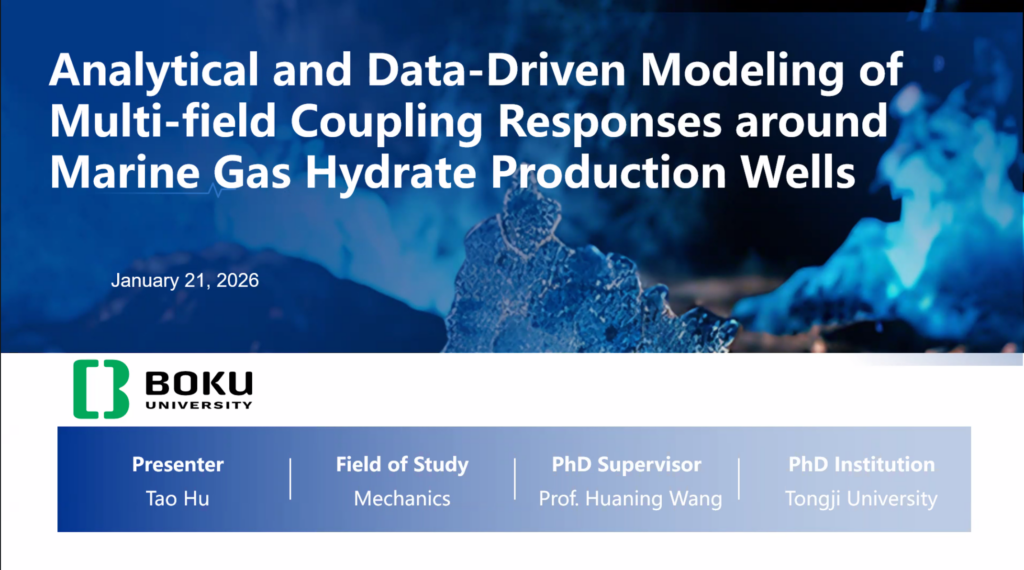
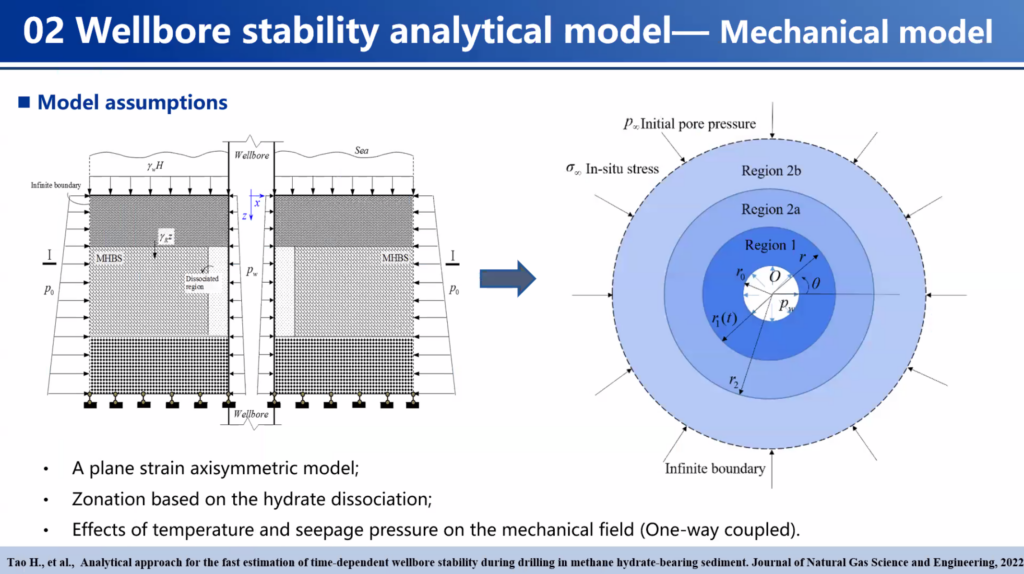

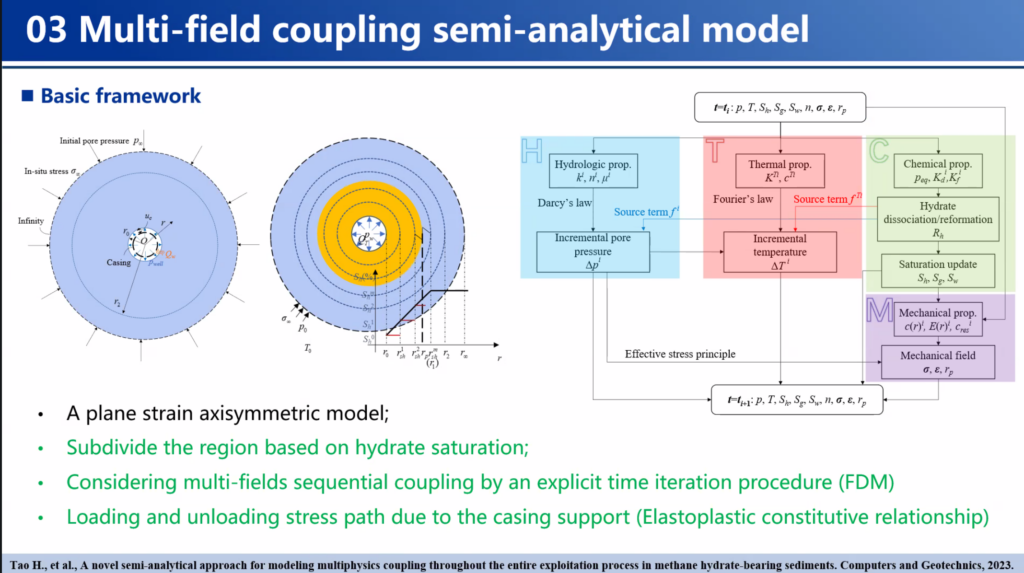
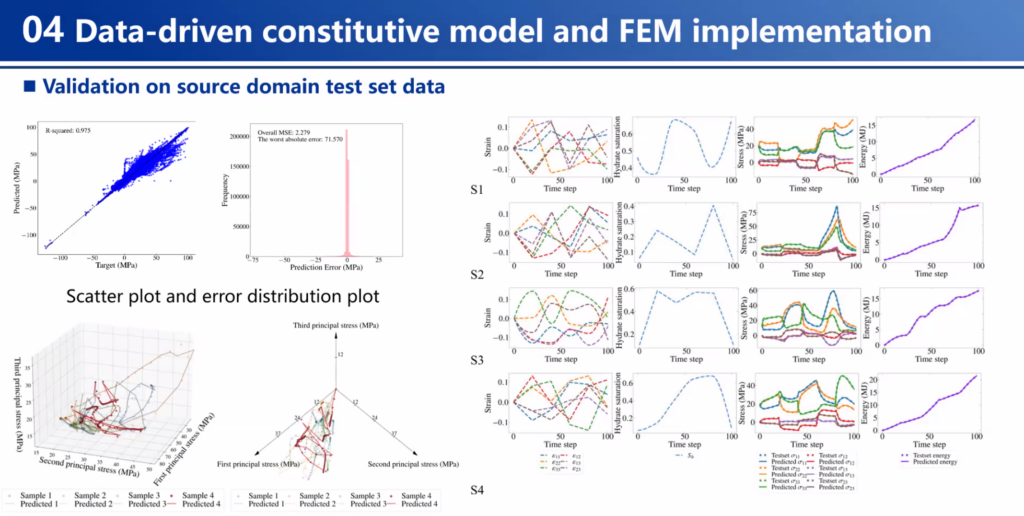
Dr. Tao Hu’ s presentation
Beyond the seminar, the visitors engaged in ongoing technical discussions with BOKU staff and doctoral researchers. The teams jointly reviewed the current research progress within LOC3G and discussed perspectives for future cooperation, including coordinated experiments, joint publications and follow-up secondments. The visit also included a tour of the geotechnical engineering laboratory at BOKU, where the guests were introduced to ongoing centrifuge and ring-shear testing activities, helping to identify complementary strengths and concrete topics for continued collaboration.


Visiting the laboratory
The group photos with researchers in BOKU