1. Event Overview
The 2nd Doctoral School within the LOC3G project was held from 1 to 3 June 2026 at École nationale des ponts et chaussées in Paris. The event brought together researchers, doctoral candidates, invited speakers, and project partners for intensive training, scientific exchange, and interdisciplinary discussion.
The doctoral school covered a broad range of topics related to geomechanics, geohazards, localization, damage, fracture, subsurface energy systems, and advanced computational modelling. Through invited lectures, poster presentations, informal discussions, and laboratory visits, participants had the opportunity to broaden their scientific understanding, exchange research ideas, and strengthen collaboration within the LOC3G consortium.
2. First Day of the Doctoral School
The first day opened on 1 June 2026 at École nationale des ponts et chaussées. The programme focused on advanced constitutive modelling, damage mechanics, large-deformation geotechnical analysis, computational fracture modelling, and strain localization in geomaterials. Five invited lectures were delivered during the day, followed by a poster session and an informal networking event.
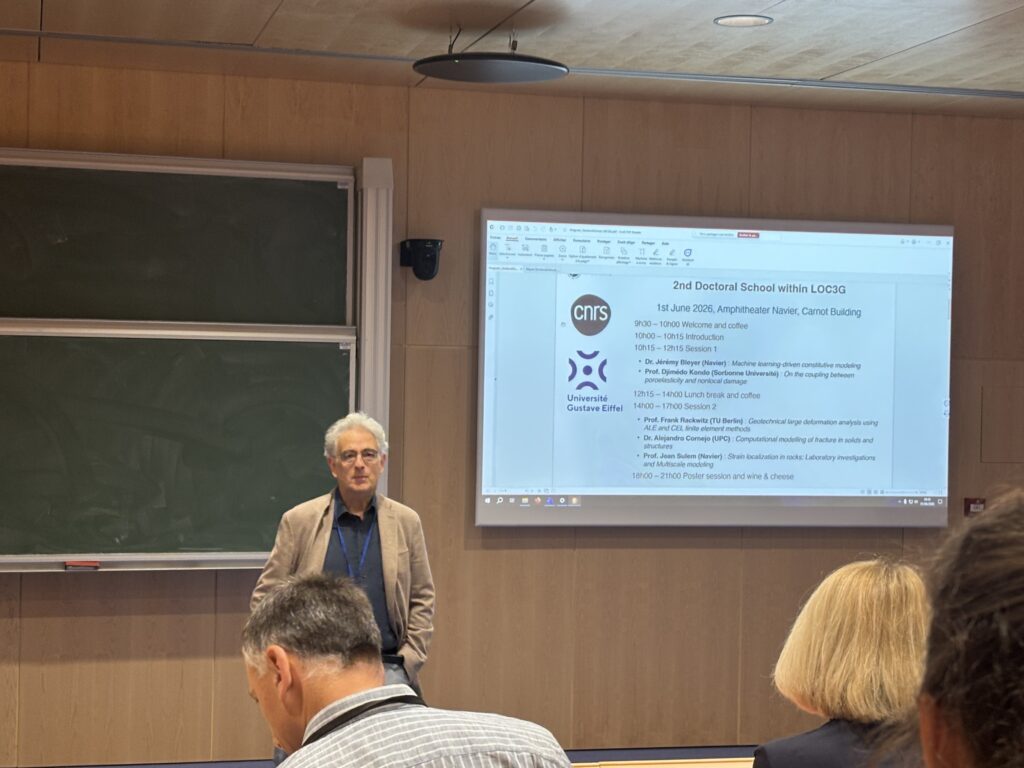
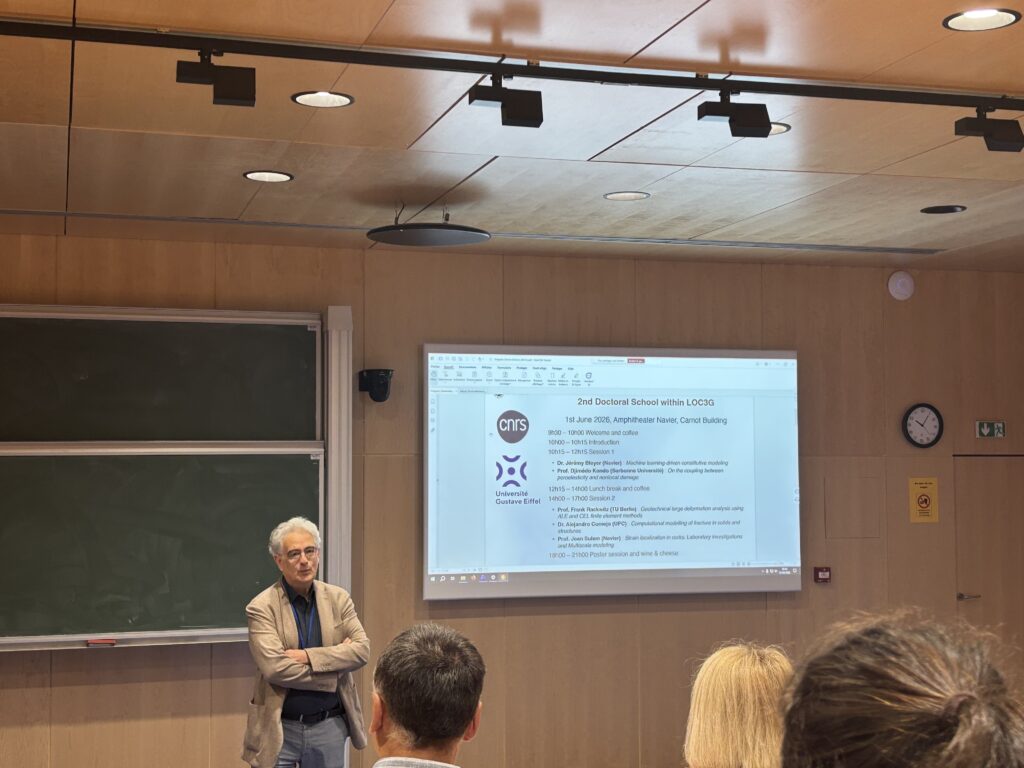
Opening session of the 2nd LOC3G Doctoral School École nationale des ponts et chaussées.
2.1 Invited Lectures
The morning session began with a lecture by Dr. Jérémy Bleyer from Laboratoire Navier, entitled “Machine learning-driven constitutive modeling.” His presentation introduced how machine-learning techniques can contribute to the development of constitutive models for complex materials. The lecture highlighted the potential of data-driven methods for identifying material behaviour, while also emphasizing the importance of maintaining physical consistency and interpretability in constitutive descriptions.
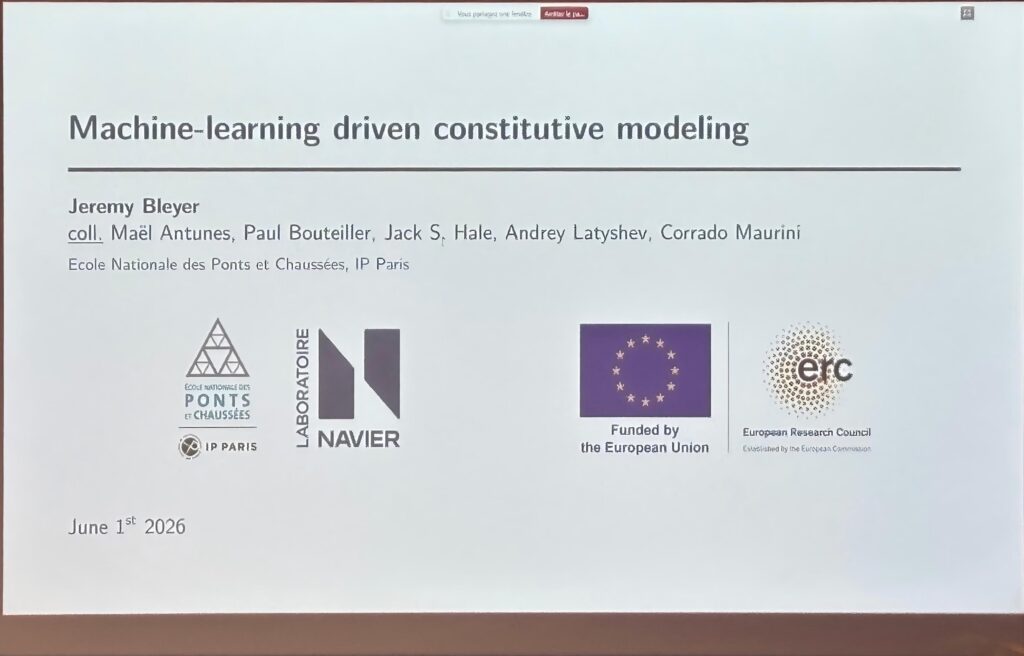
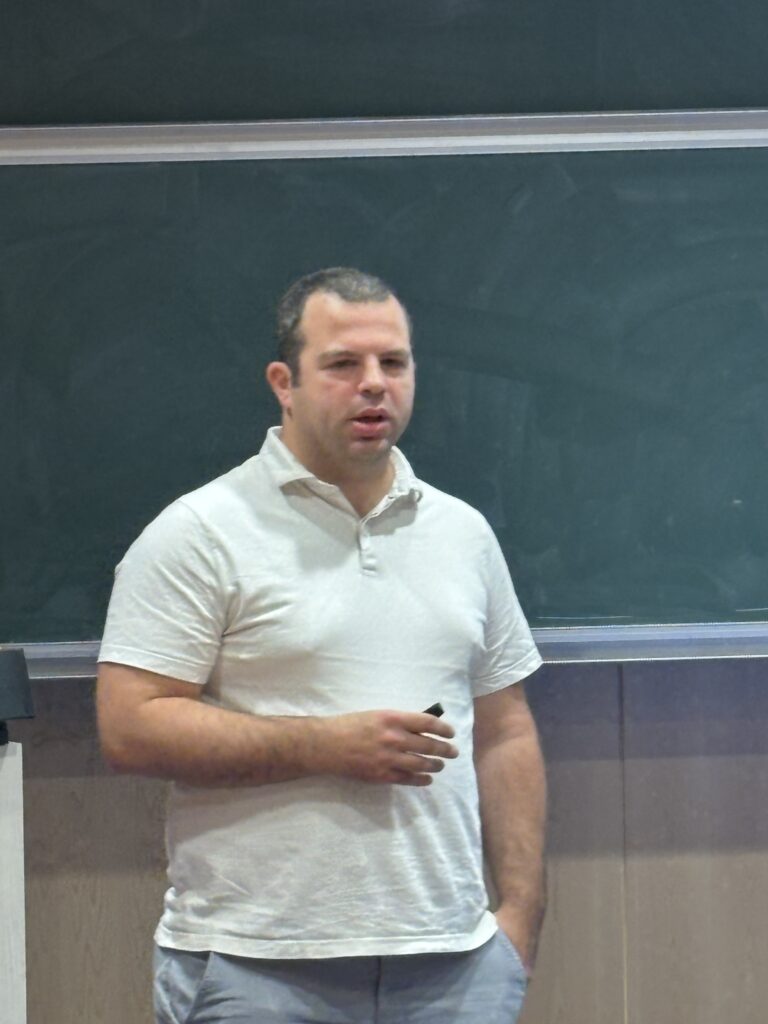
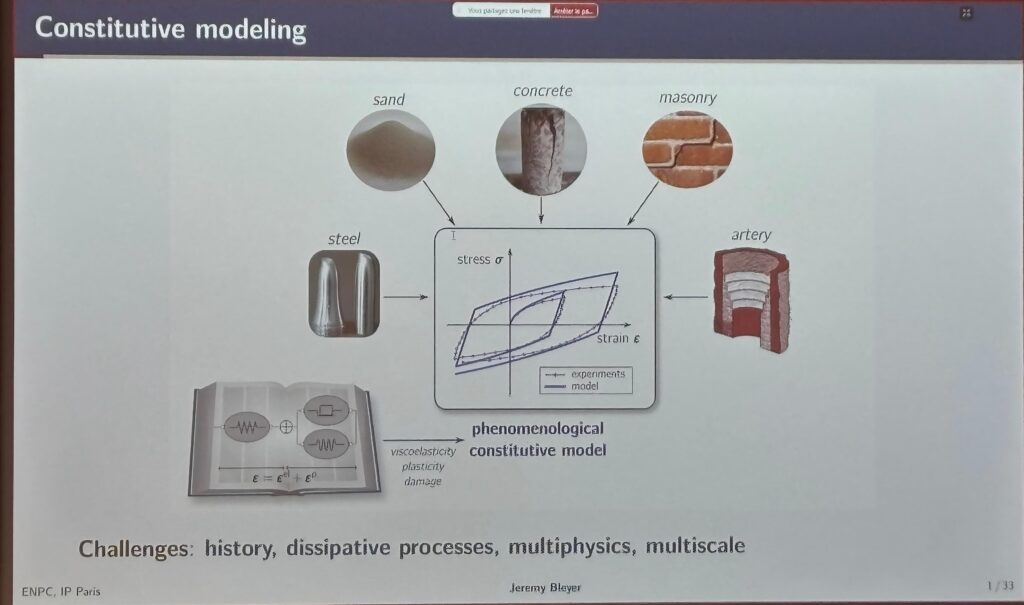
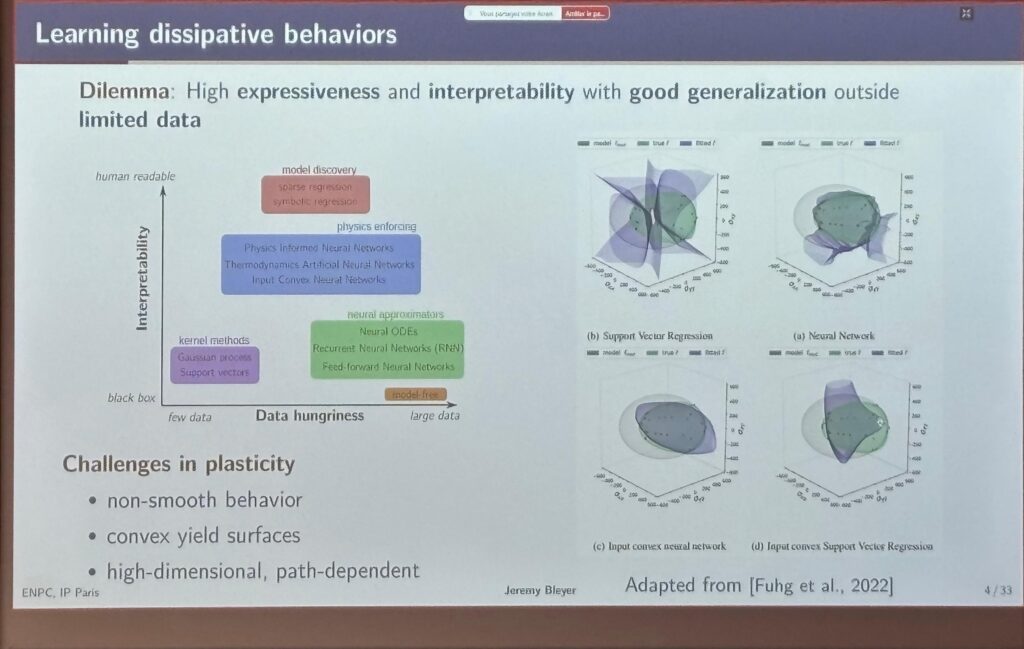
Lecture by Dr. Jérémy Bleyer on machine-learning-driven constitutive modelling.
The second lecture was delivered by Prof. Djimédo Kondo from Sorbonne Université, who presented “On the coupling between poroelasticity and nonlocal damage.” His talk addressed the interaction between pore-pressure-related effects and damage evolution in porous materials. Particular attention was paid to nonlocal damage formulations, which are important for describing localization phenomena and reducing mesh dependency in numerical simulations.
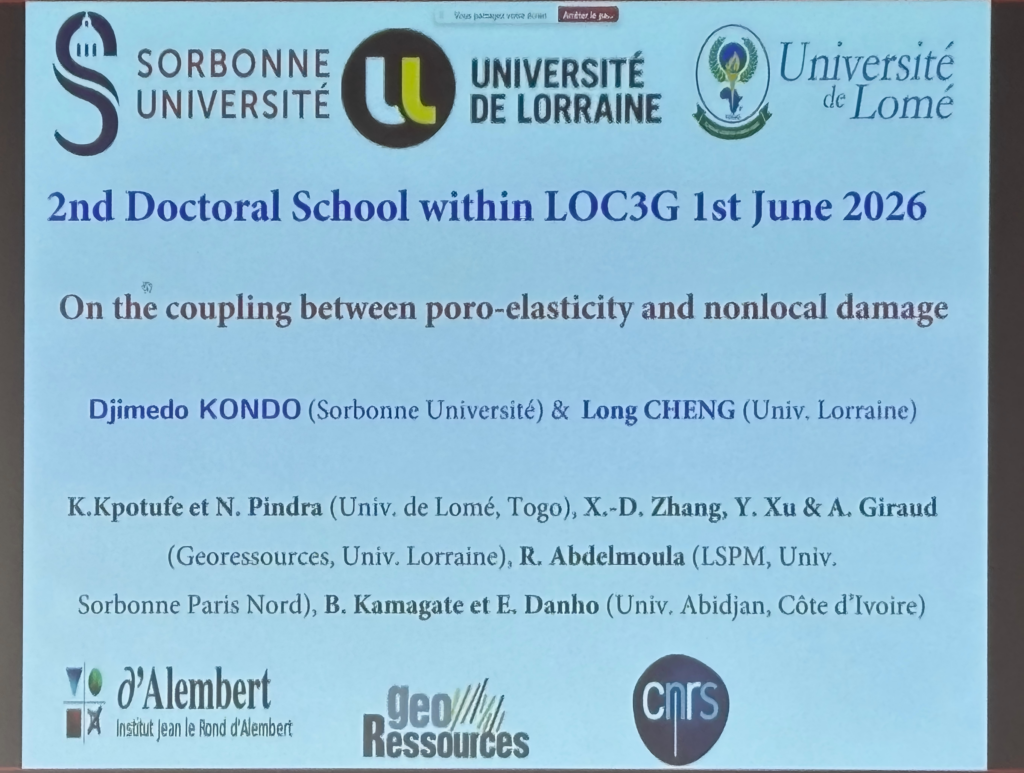
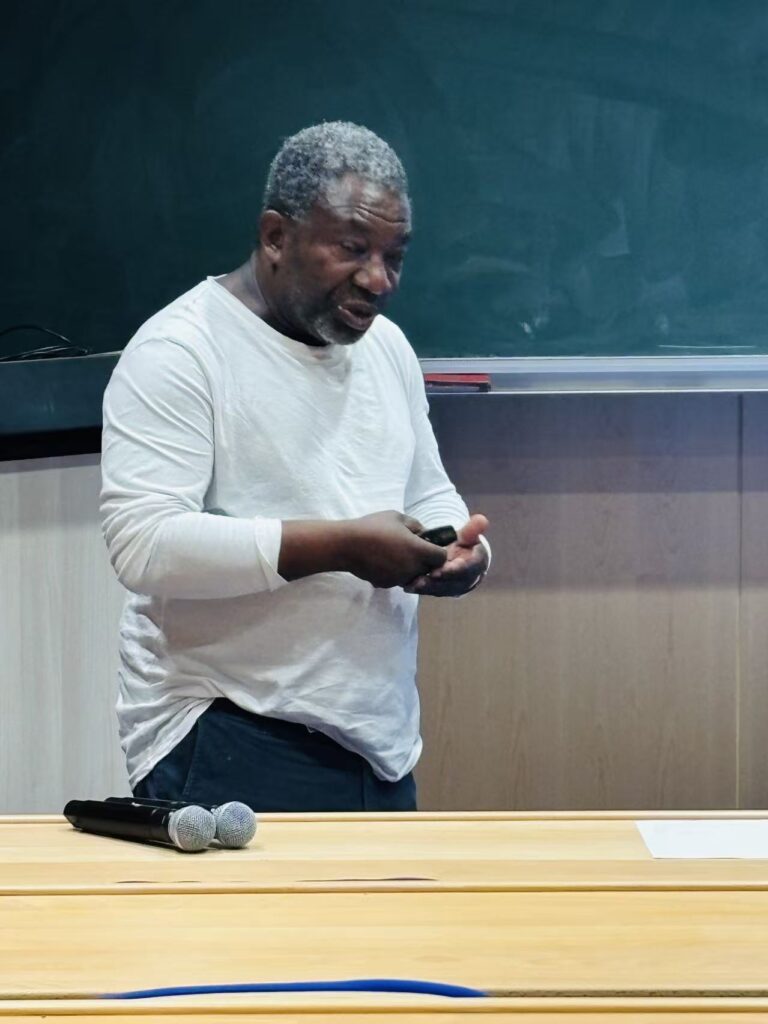
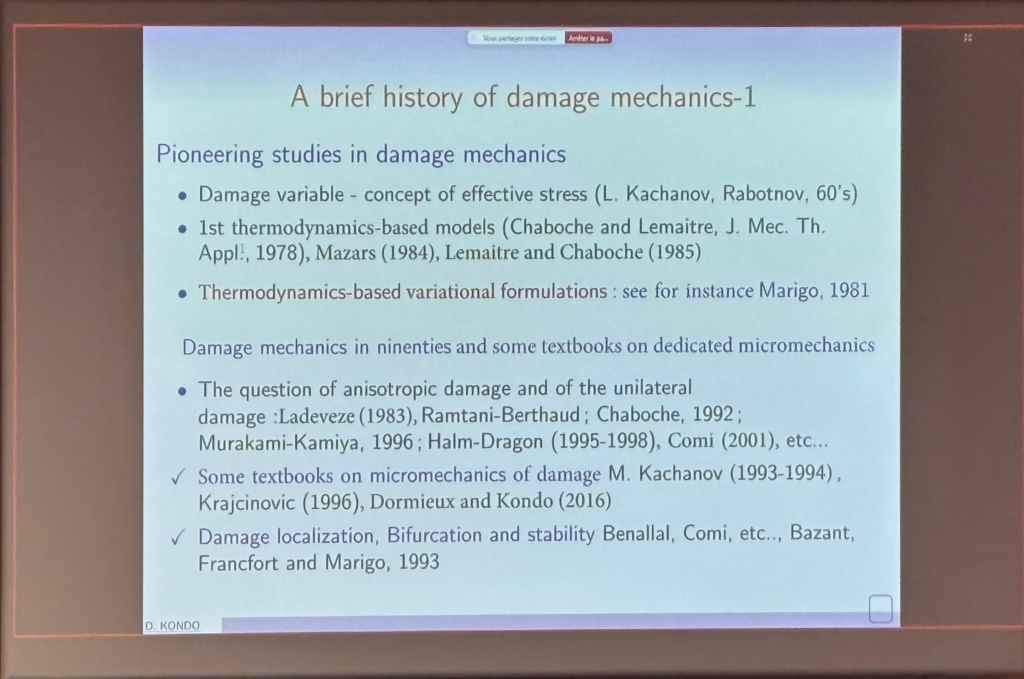
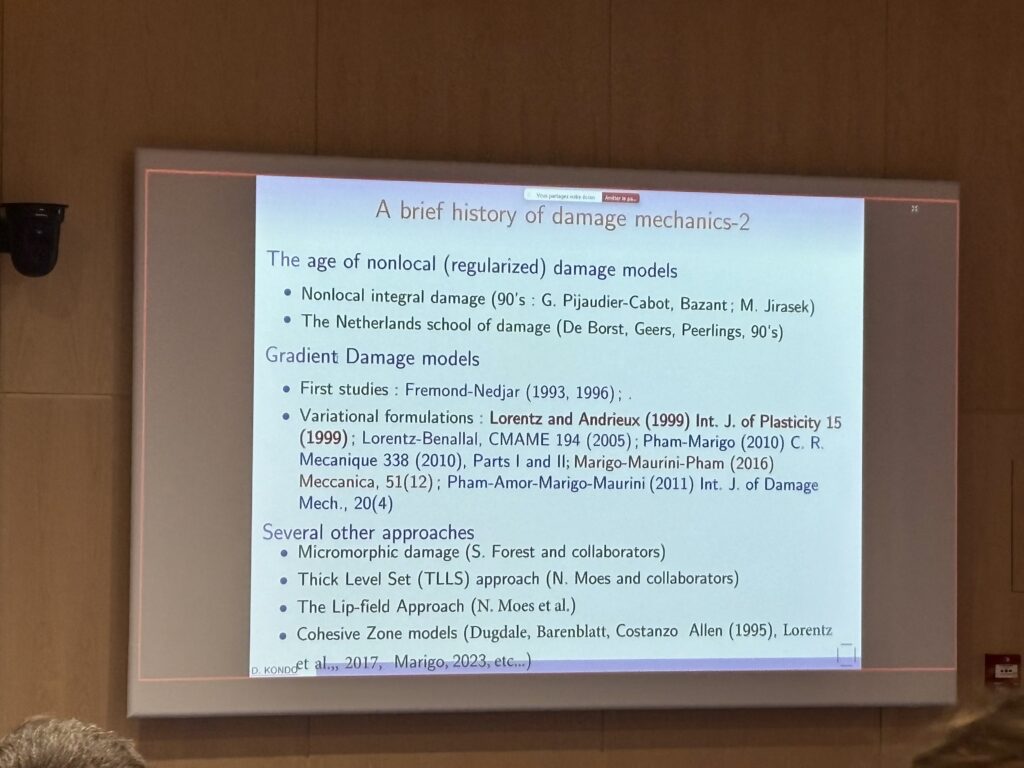
Prof. Djimédo Kondo discussed the coupling between poroelasticity and nonlocal damage.
In the afternoon session, Prof. Frank Rackwitz from TU Berlin gave a lecture entitled “Geotechnical large deformation analysis using ALE and CEL finite element methods.” His presentation introduced advanced numerical approaches for modelling large-deformation problems in geotechnical engineering. Through the discussion of Arbitrary Lagrangian–Eulerian and Coupled Eulerian–Lagrangian formulations, the lecture showed how complex soil–structure interaction problems and large-displacement processes can be analysed more effectively.
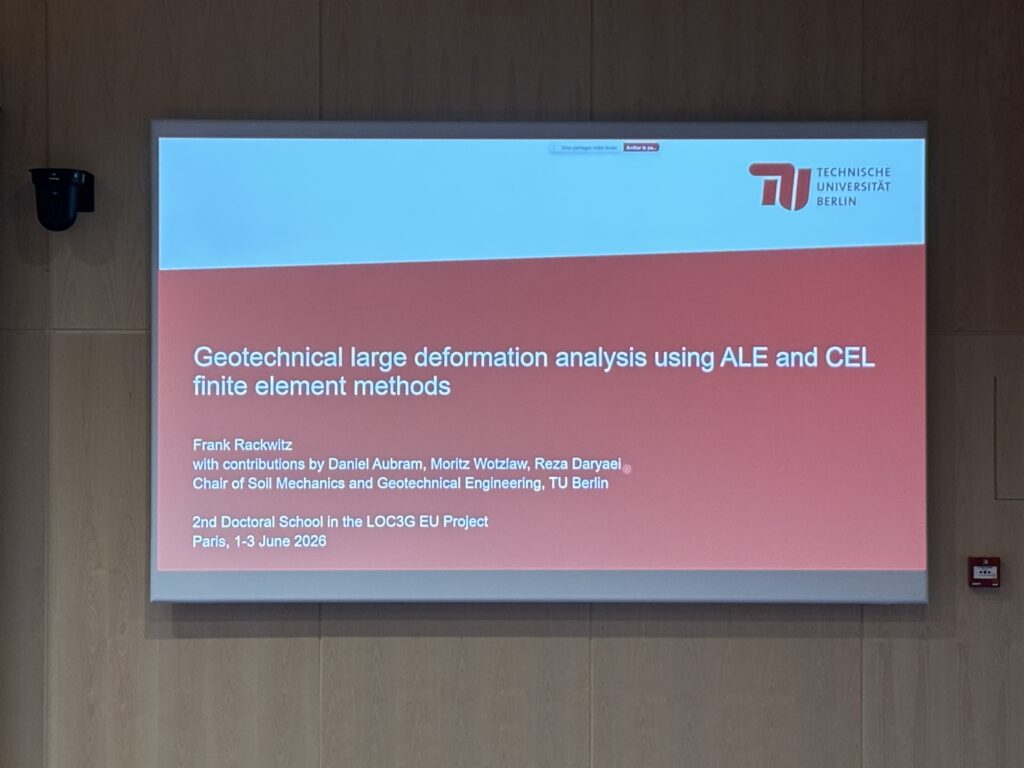
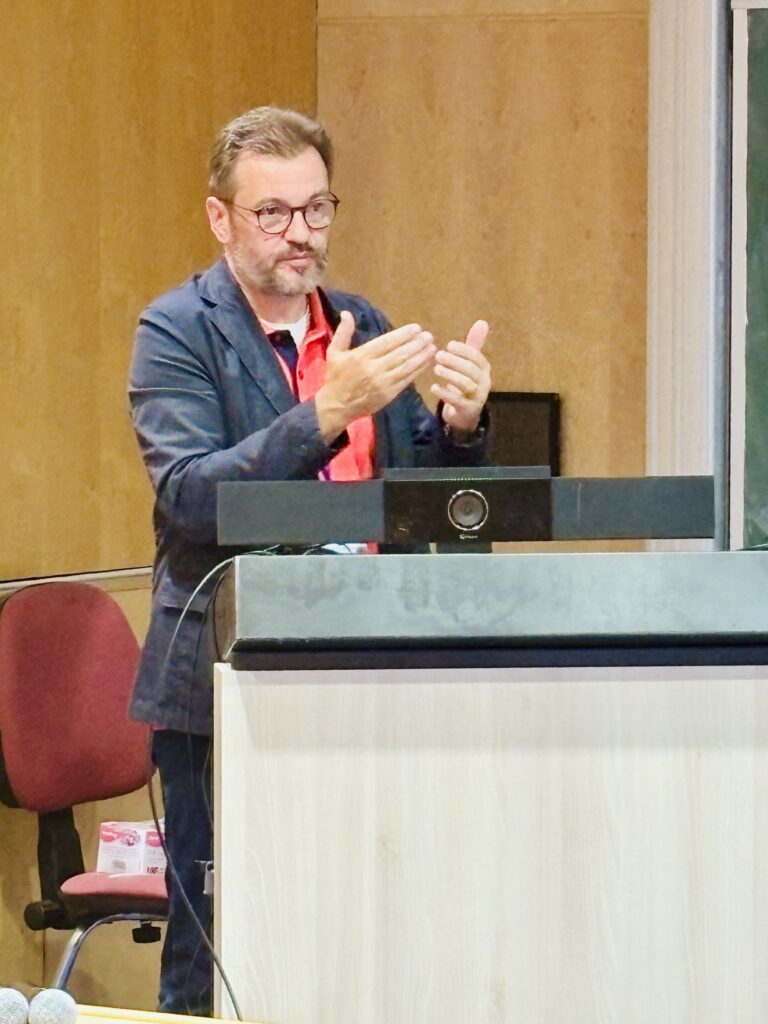
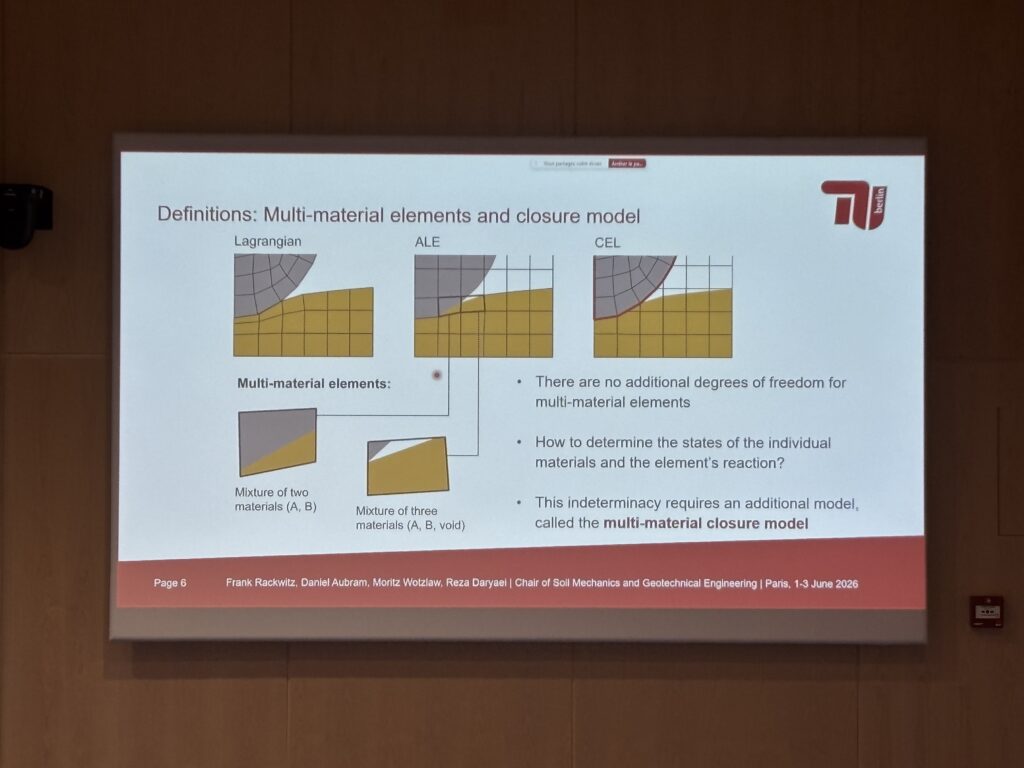
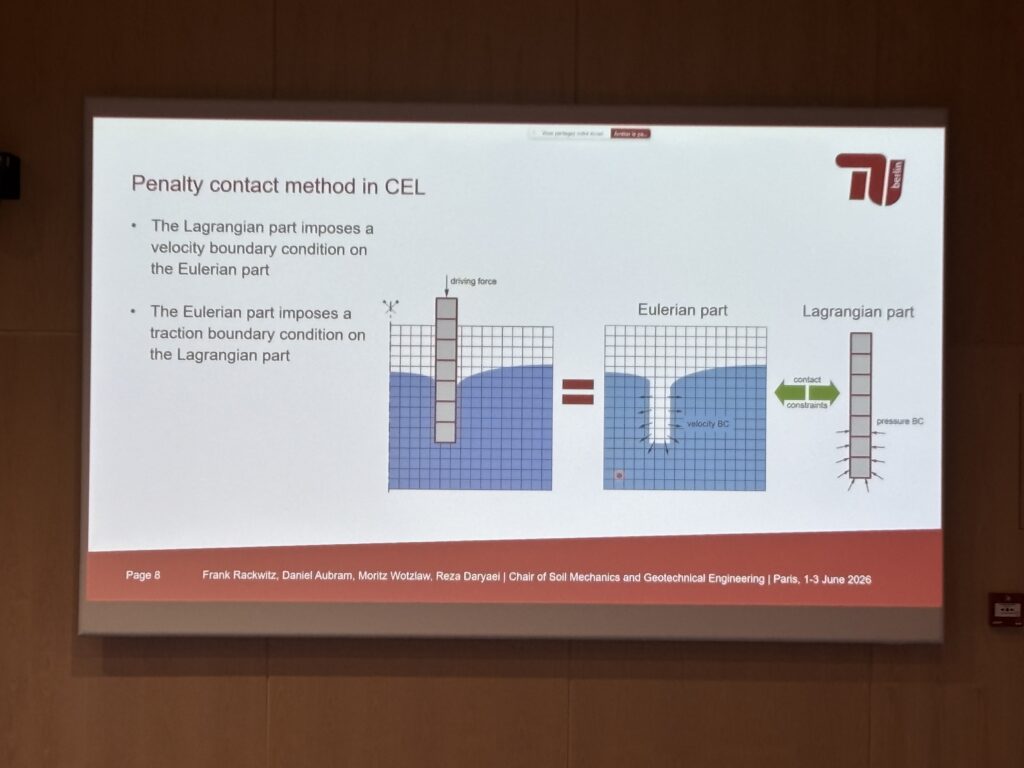
ALE and CEL finite element methods for geotechnical large-deformation analysis.
The following lecture was given by Dr. Alejandro Cornejo from UPC, entitled “Computational modelling of fracture in solids and structures.” His presentation explained the importance of fracture modelling for evaluating structural integrity, material failure, and the long-term reliability of engineering systems. The lecture introduced computational approaches for simulating crack initiation and propagation, with applications in structural safety, material design, and hazard mitigation.
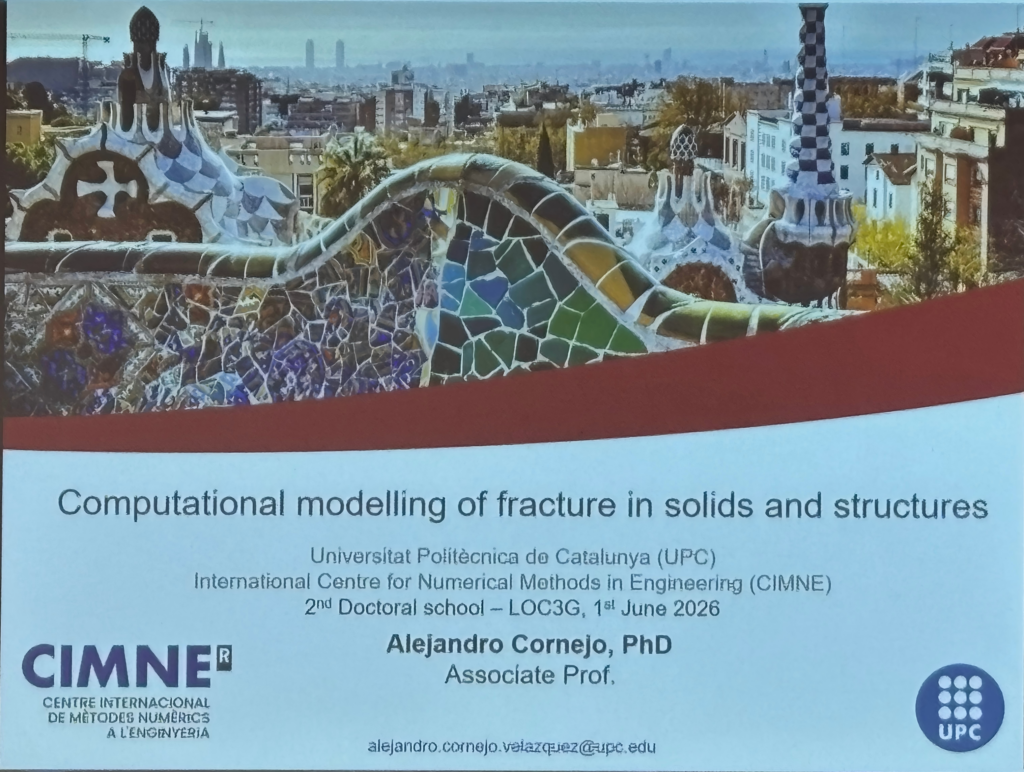
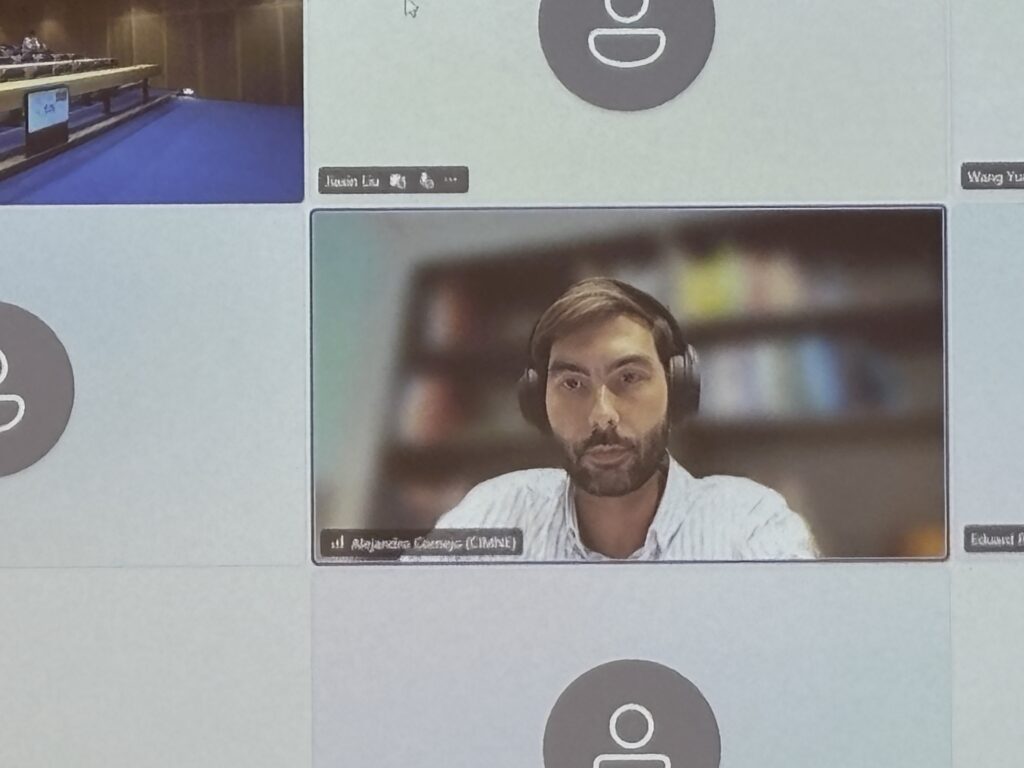
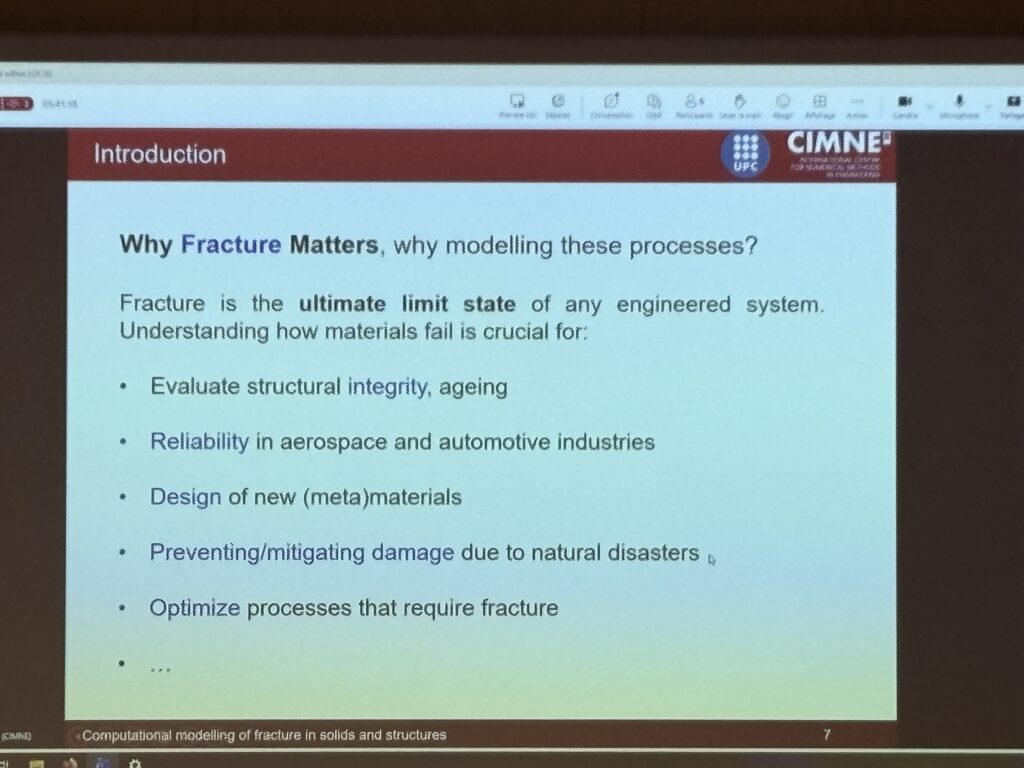
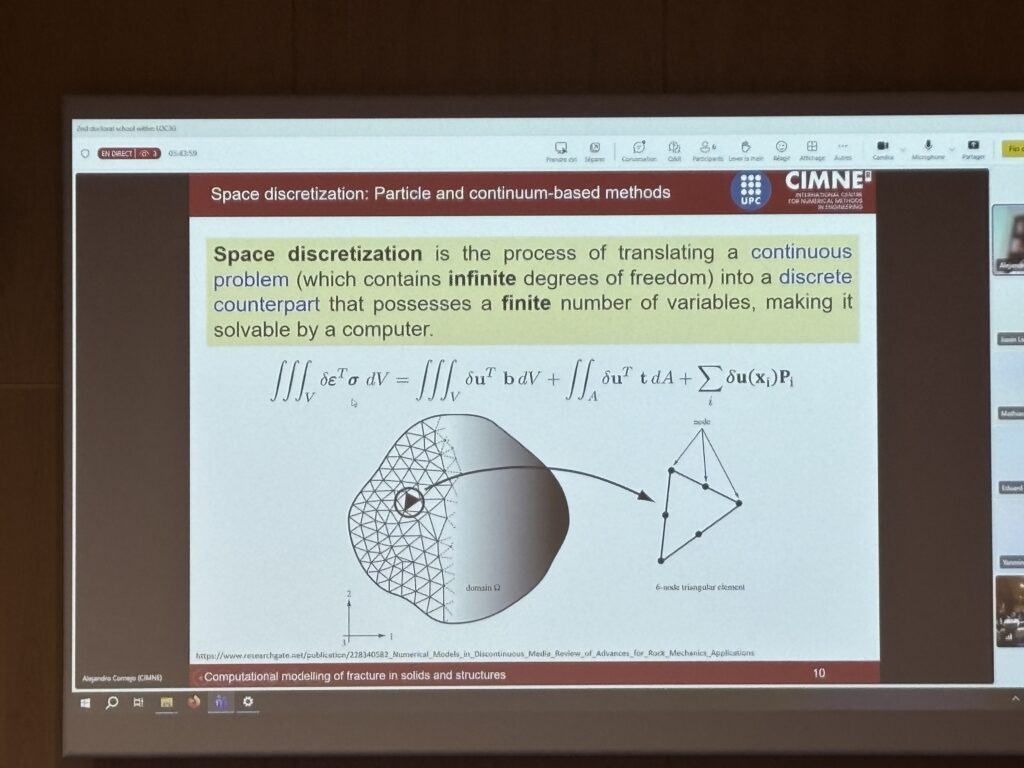
Computational approaches for fracture modelling in solids and structures.
The final lecture of the day was delivered by Prof. Jean Sulem from Laboratoire Navier, entitled “Strain localization in rocks: Laboratory investigations and Multiscale modeling.” His lecture focused on the mechanisms of strain localization in geomaterials, combining laboratory observations with theoretical and multiscale modelling approaches. The presentation provided valuable insights into failure mechanisms, compaction banding, and coupled chemo-mechanical processes in rocks.
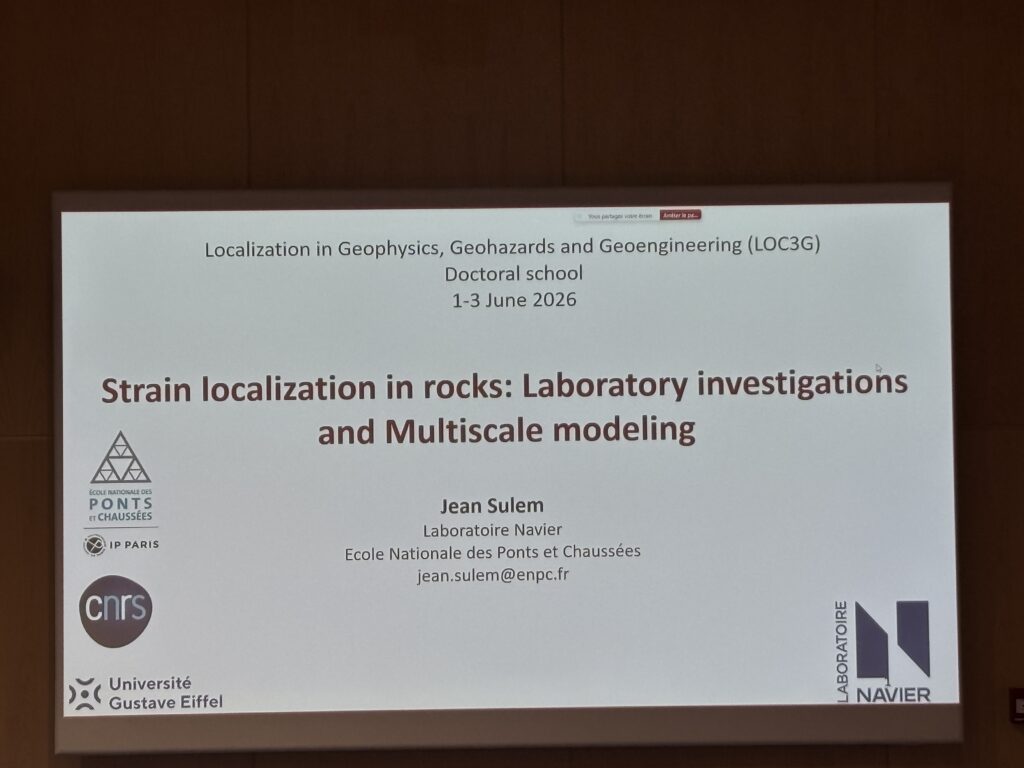
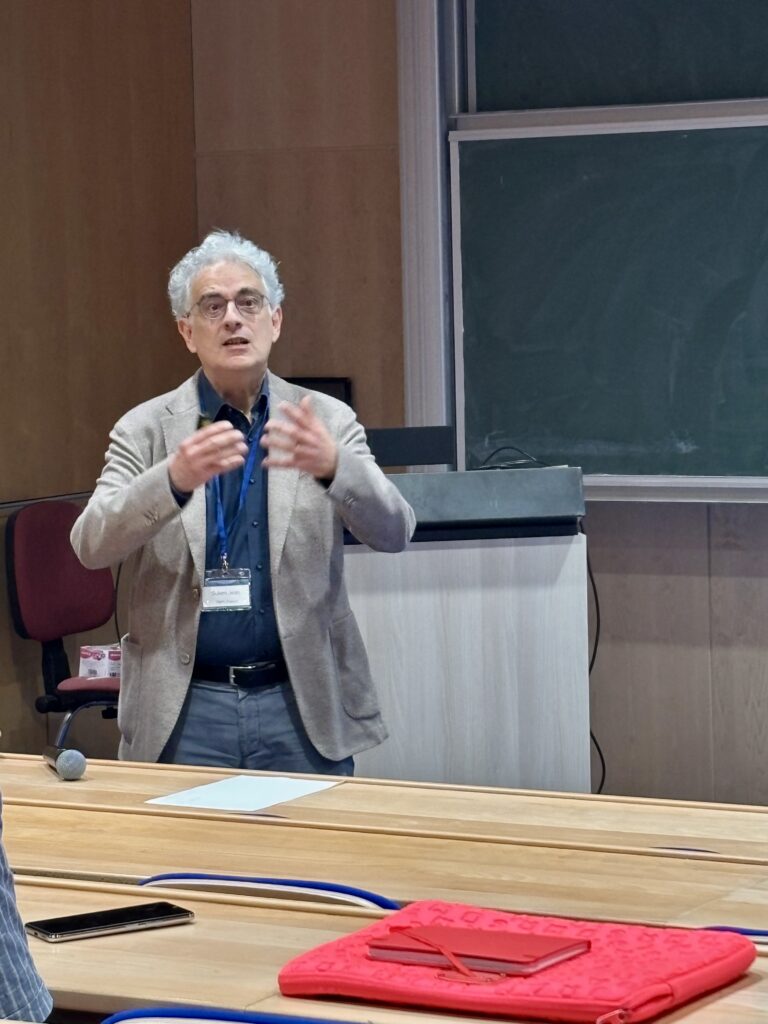
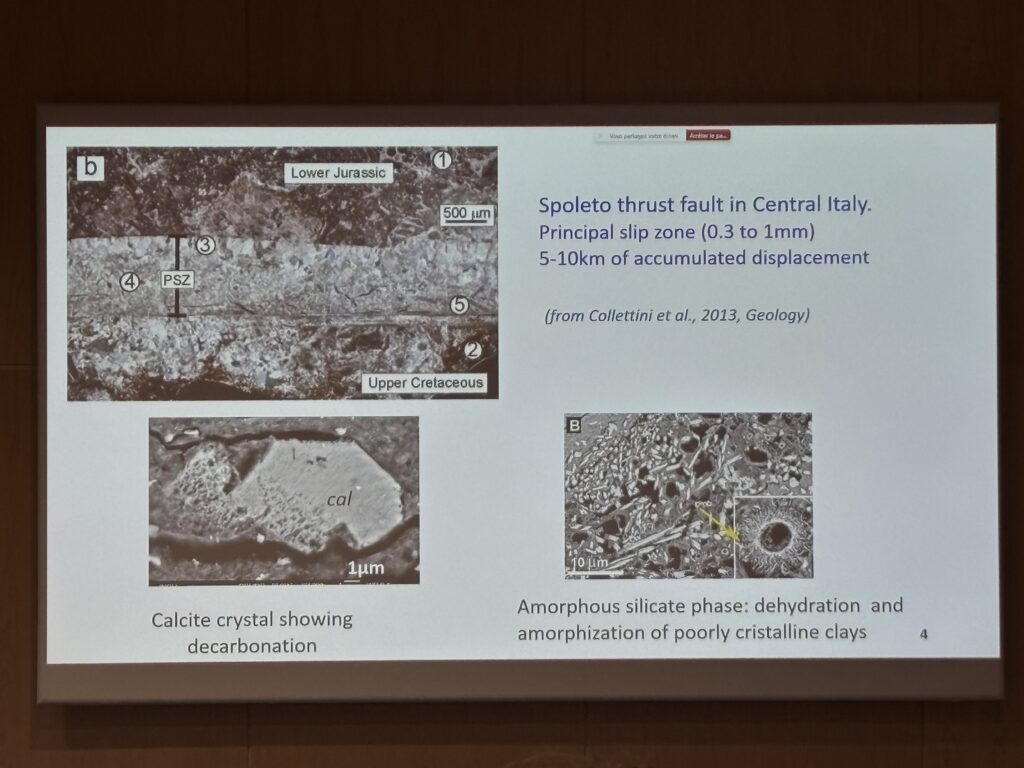
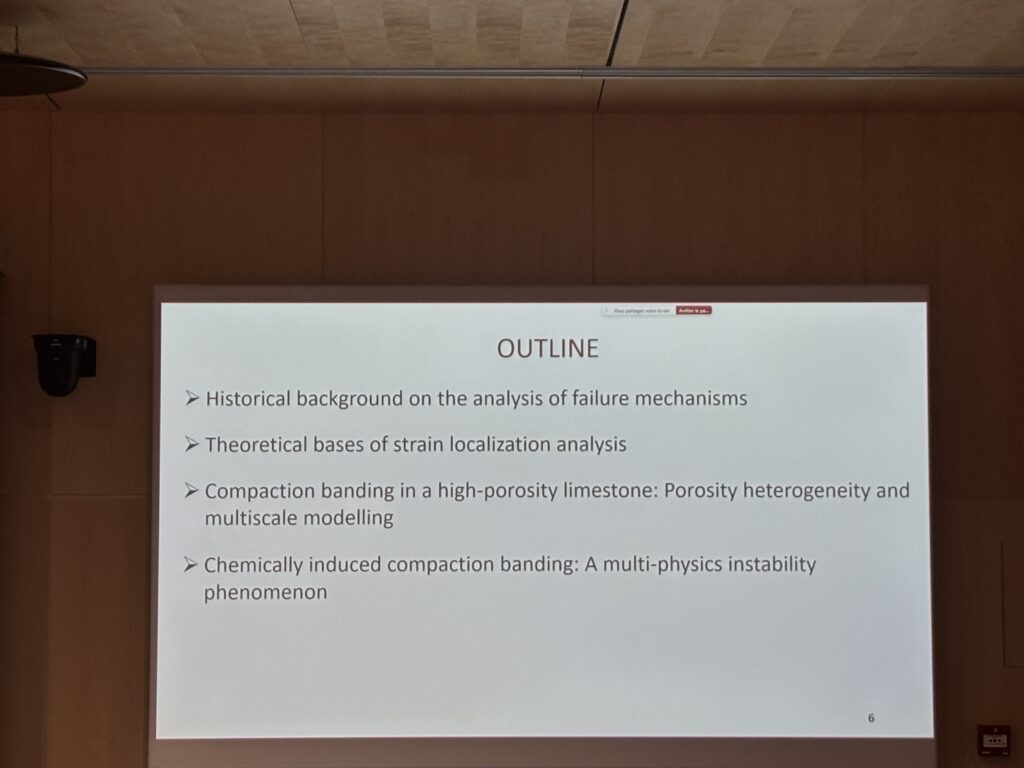
Laboratory investigations and multiscale modelling of strain localization in rocks.
2.2 Poster Session and Networking
The first day concluded with a poster session and wine-and-cheese networking event. This session provided an opportunity for doctoral candidates and researchers to present their work, exchange ideas, and discuss potential collaborations with senior scientists and project partners. The poster session encouraged active scientific interaction and strengthened communication within the LOC3G consortium.
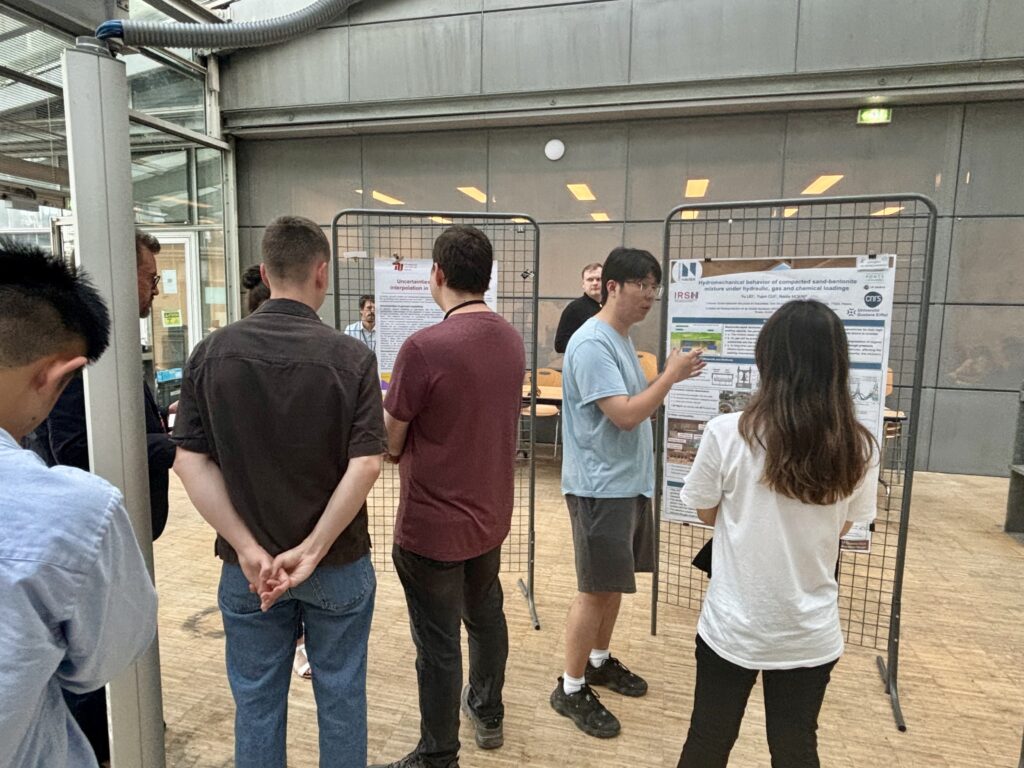
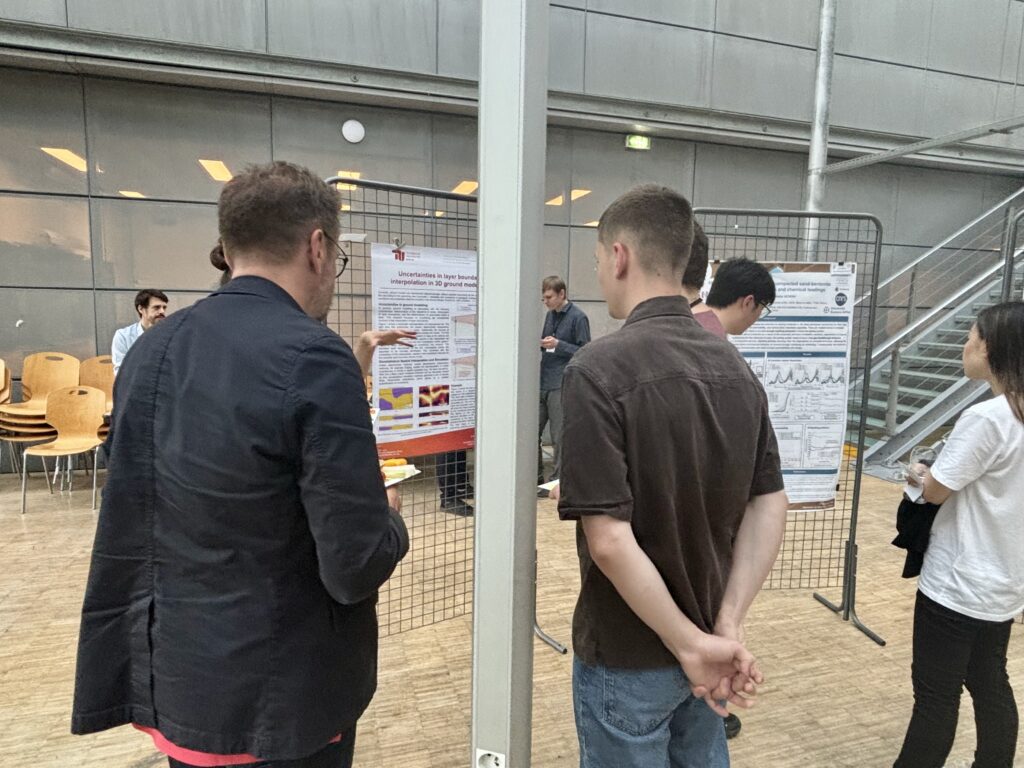
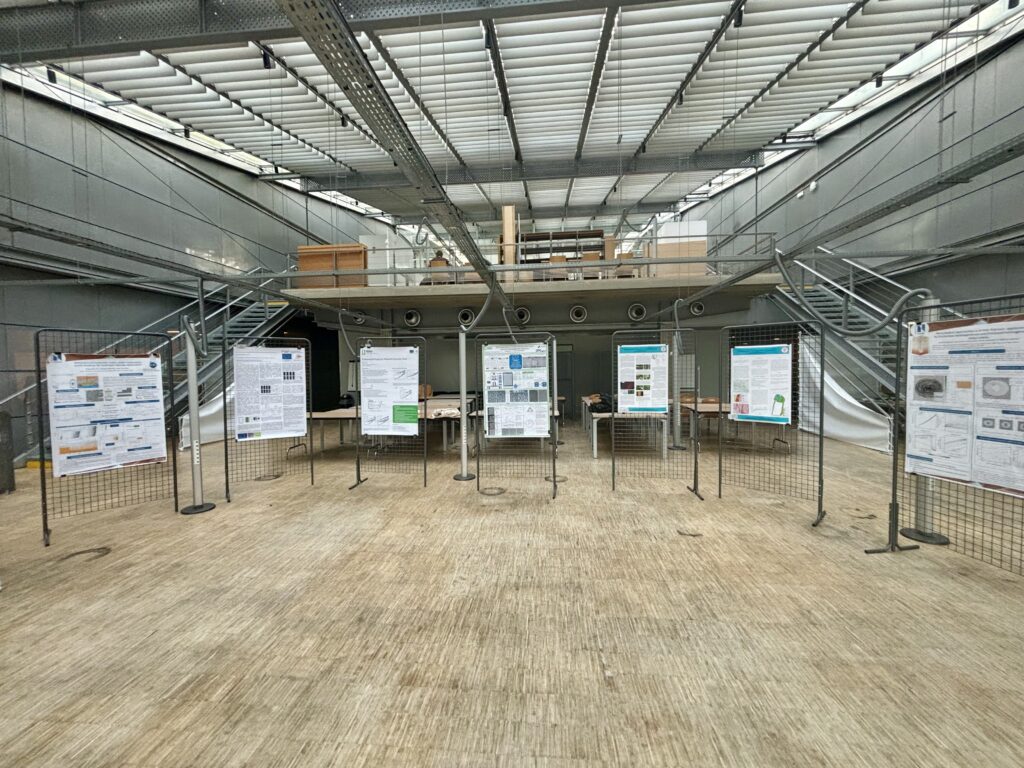
Poster session during the first day of the 2nd LOC3G Doctoral School.
3. Second Day of the Doctoral School
The second-day programme began with a lecture by Dr. Tao Hu from BOKU, entitled “Analytical Modeling of Multi-field Coupling Responses around Marine Gas Hydrate Production Wells.” His presentation focused on the coupled thermal, hydraulic, and mechanical responses associated with marine gas hydrate production. The lecture introduced analytical modelling approaches for wellbore stability and hydrate dissociation processes, providing insights into the complex multi-field interactions that occur during gas hydrate exploitation.
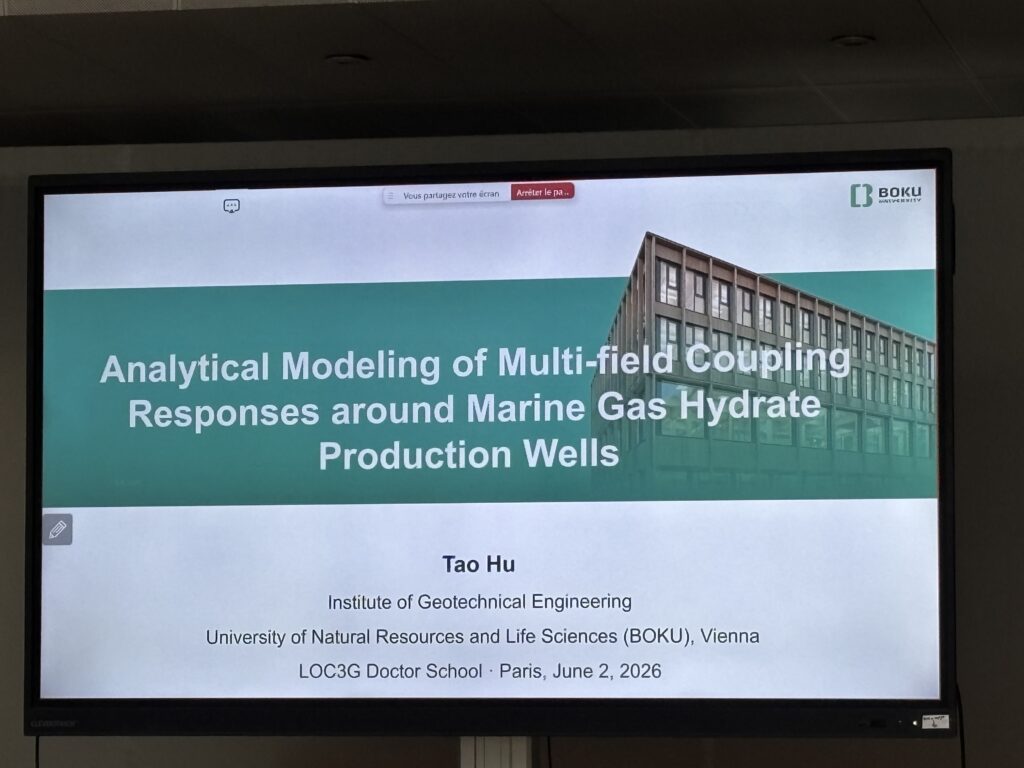
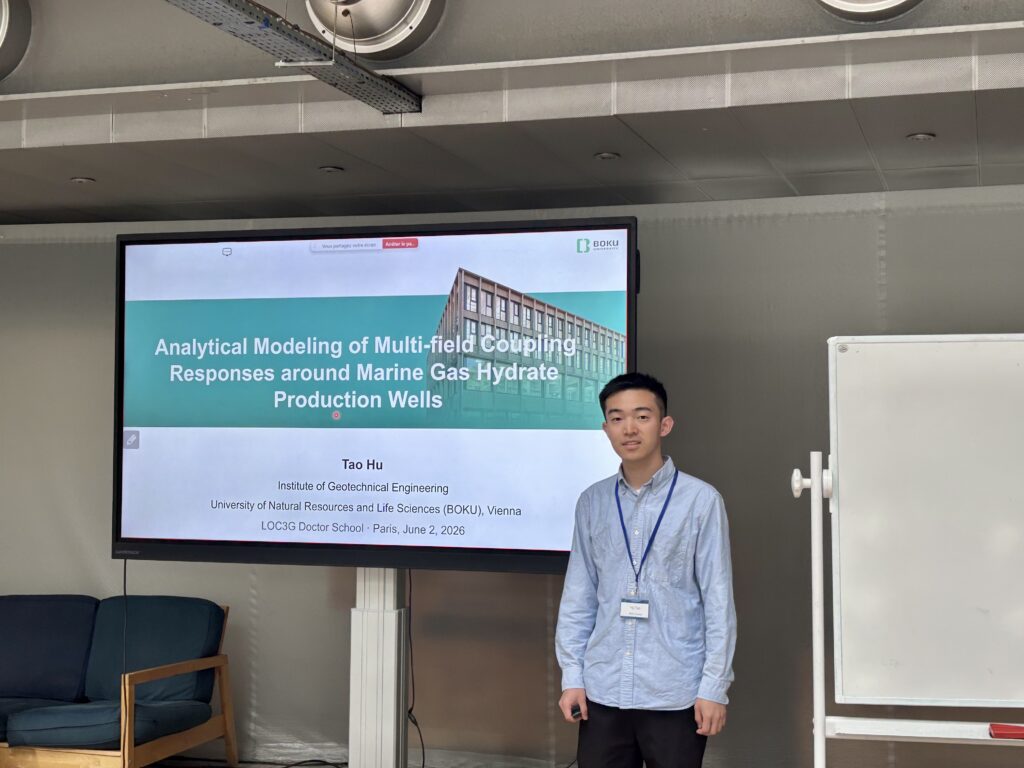
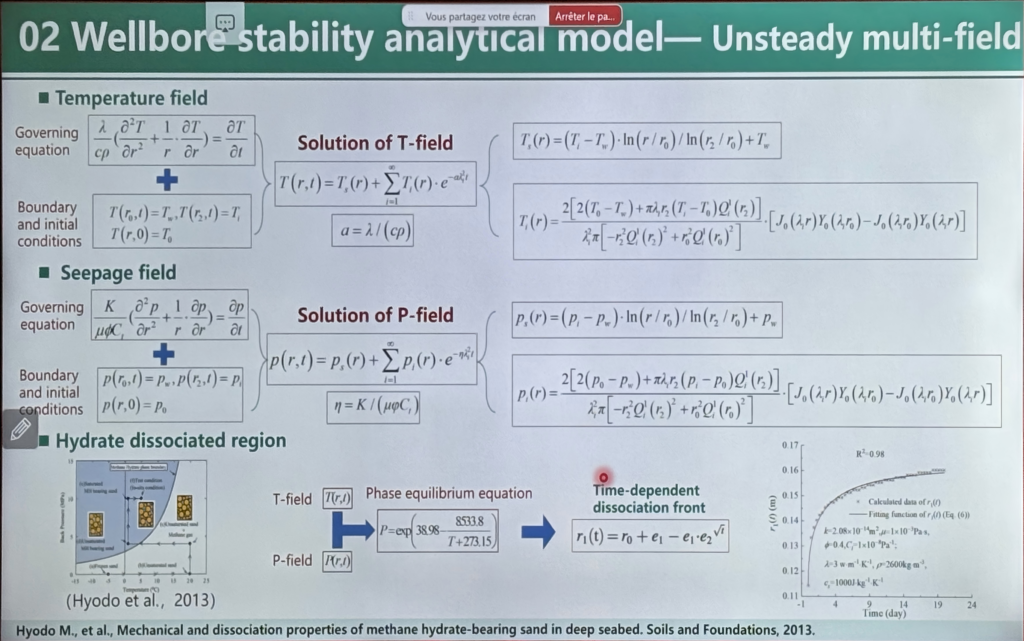
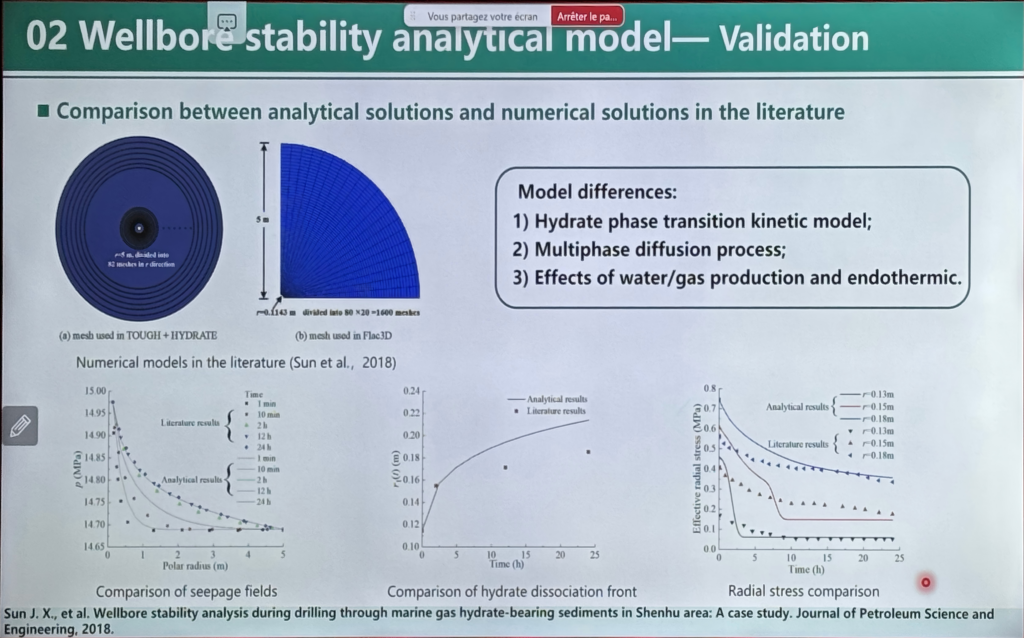
Analytical modelling of multi-field coupling responses around marine gas hydrate production wells.
The following session included a lecture by Dr. Olena Ivanik from Taras Shevchenko National University of Kyiv, entitled “Advances in landslide inventory and susceptibility modelling in structurally complex settings: evidence from the Cincinnati Area (USA) and the Ukrainian Carpathians.” Her presentation addressed the development of landslide inventories and susceptibility models in geologically complex regions. By drawing on case studies from the Cincinnati Area and the Ukrainian Carpathians, the lecture highlighted the importance of integrating geological, geomorphological, and spatial data for improved landslide hazard assessment.
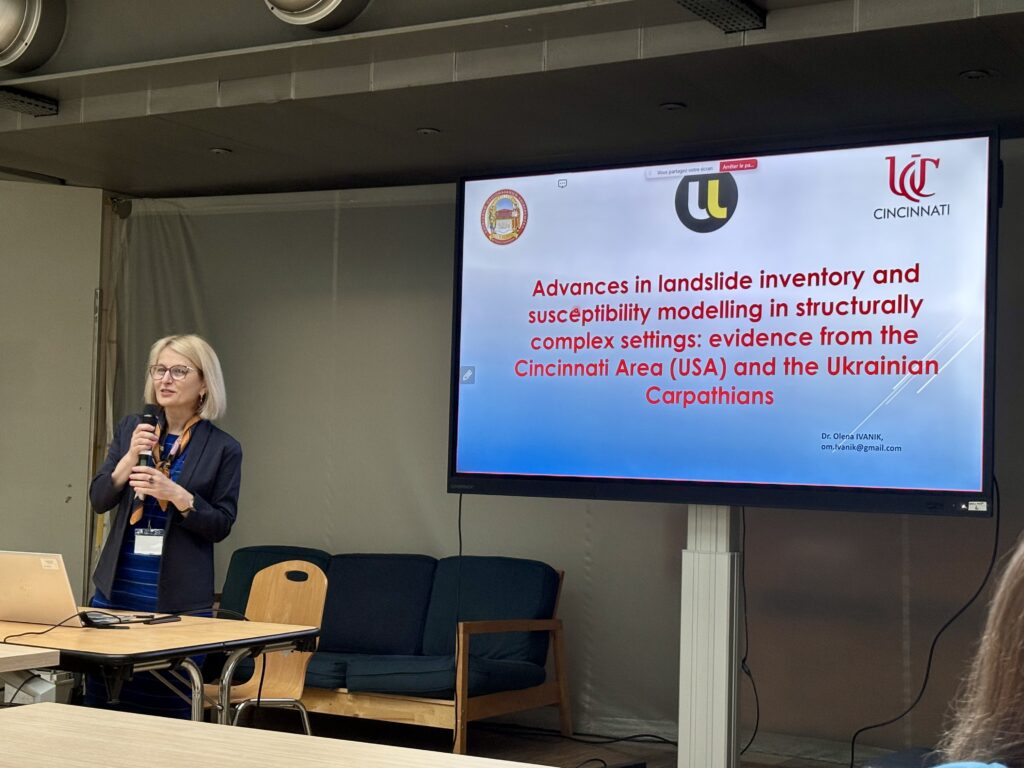
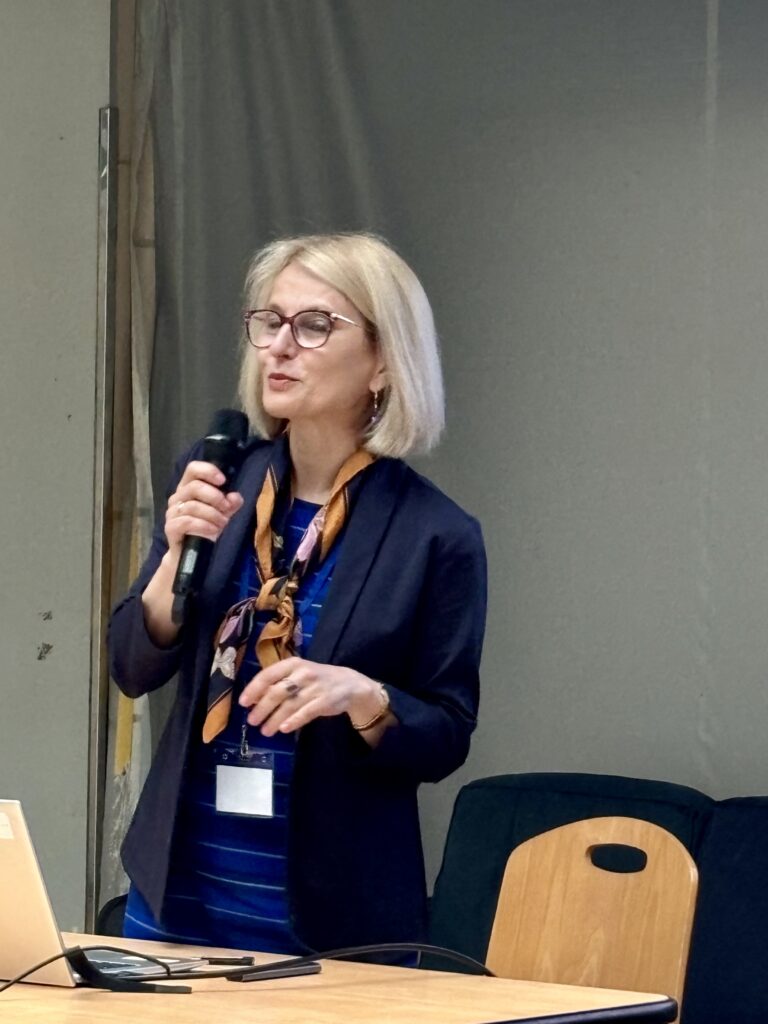
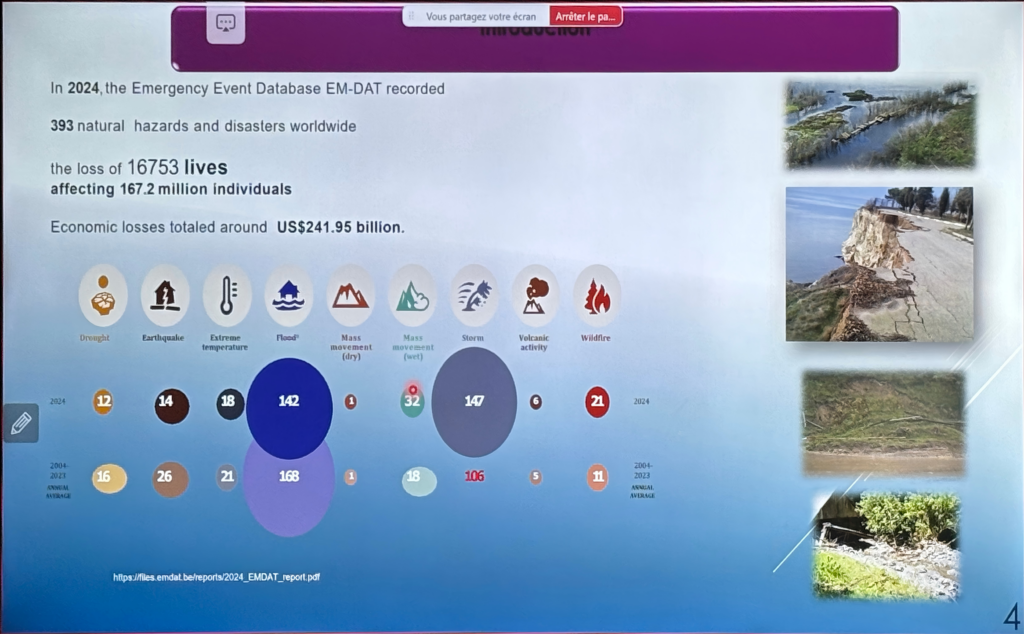
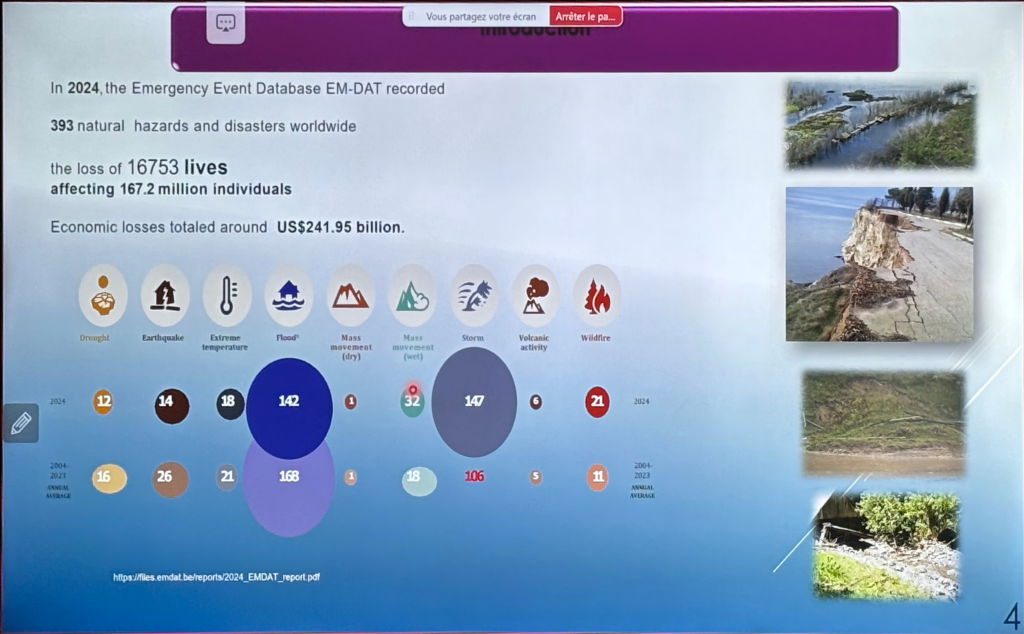
Landslide inventory and susceptibility modelling in structurally complex settings.
Another lecture was delivered by Dr. Julien Léopoldès from Laboratoire Navier, entitled “Local deformations in granular packings below the avalanche threshold.” His talk focused on the local deformation mechanisms that develop in granular materials before macroscopic failure or avalanche initiation. The presentation connected experimental observations with physical interpretation, emphasizing how small-scale rearrangements and wave-based measurement techniques can help reveal the internal evolution of granular packings.
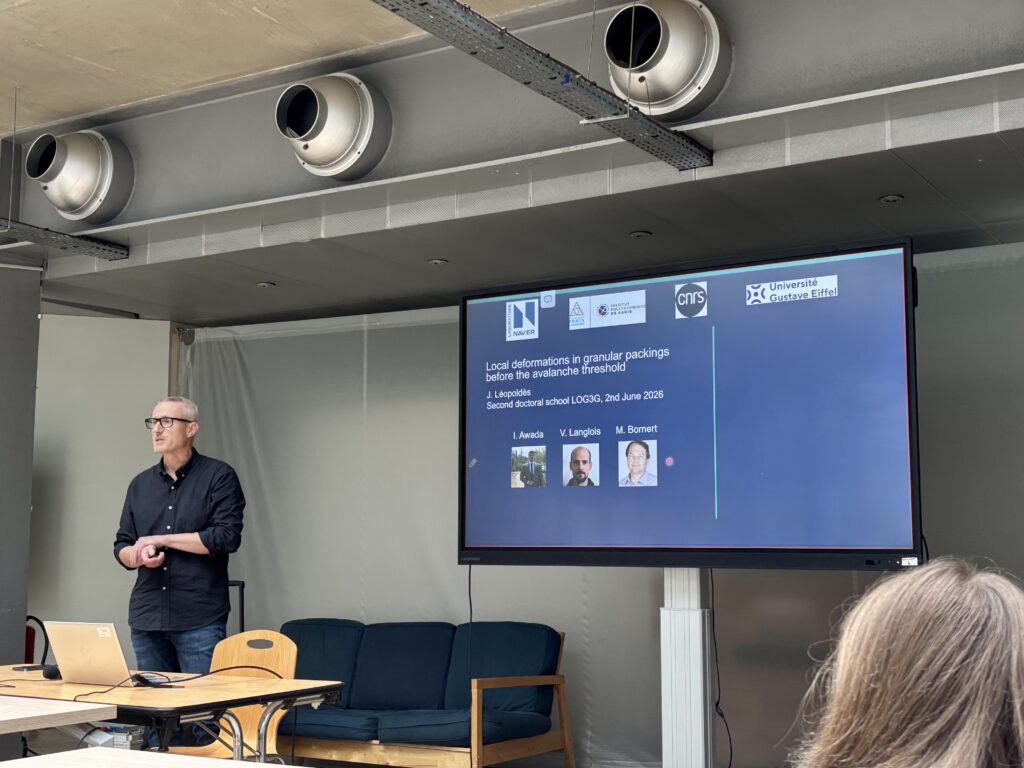
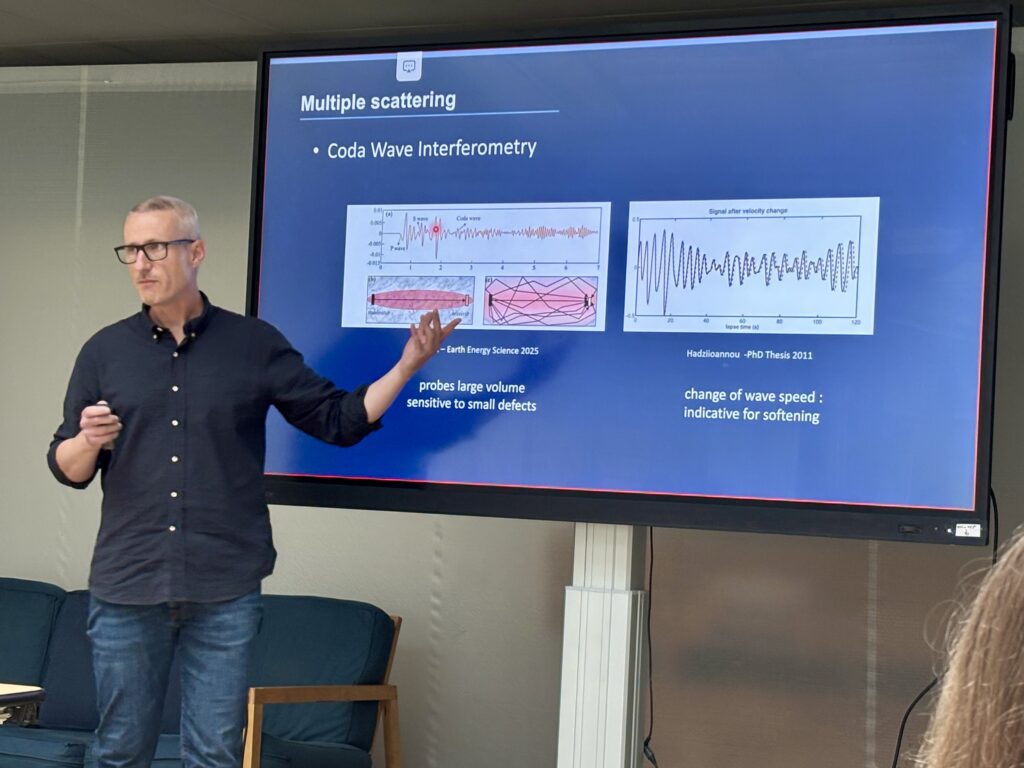
Local deformation mechanisms in granular packings below the avalanche threshold.
In the afternoon session, Dr. Dmytro Kravchenko and Dr. Oleksandr Shabatura from Taras Shevchenko National University of Kyiv presented “Structural and geophysical investigations of thrust zones in the Carpathians.” Their lecture introduced geological and geophysical approaches for investigating thrust zones and structural deformation in the Carpathian region. The presentation showed how field observations, structural interpretation, and geophysical data can be combined to improve the understanding of complex tectonic settings.
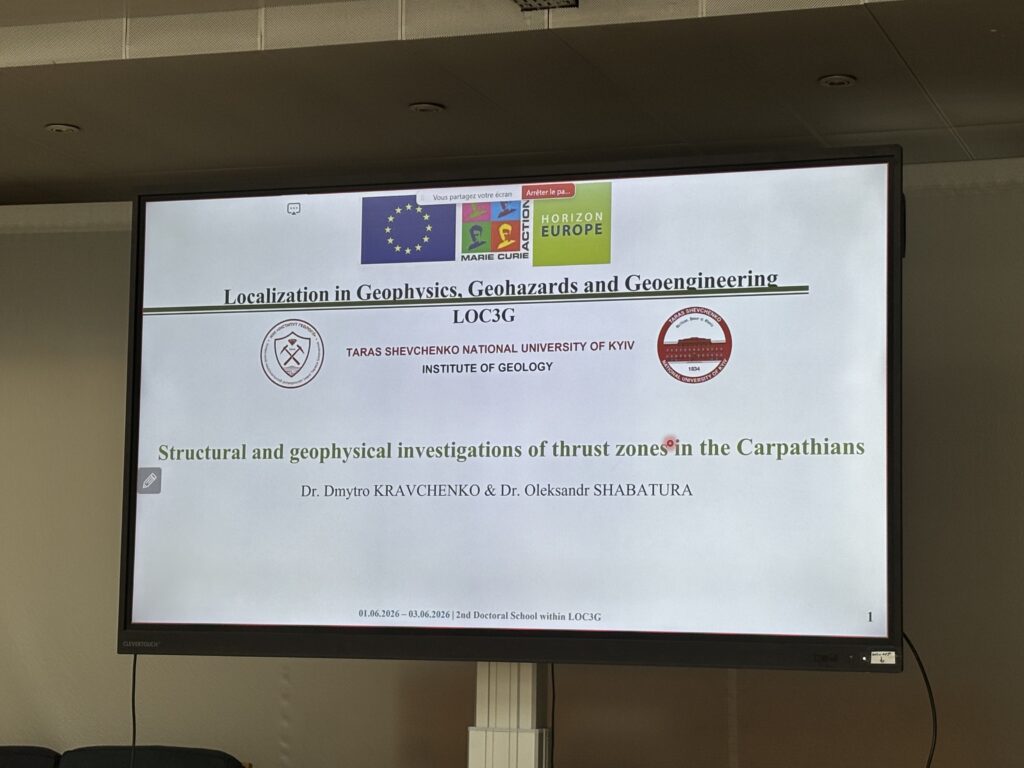
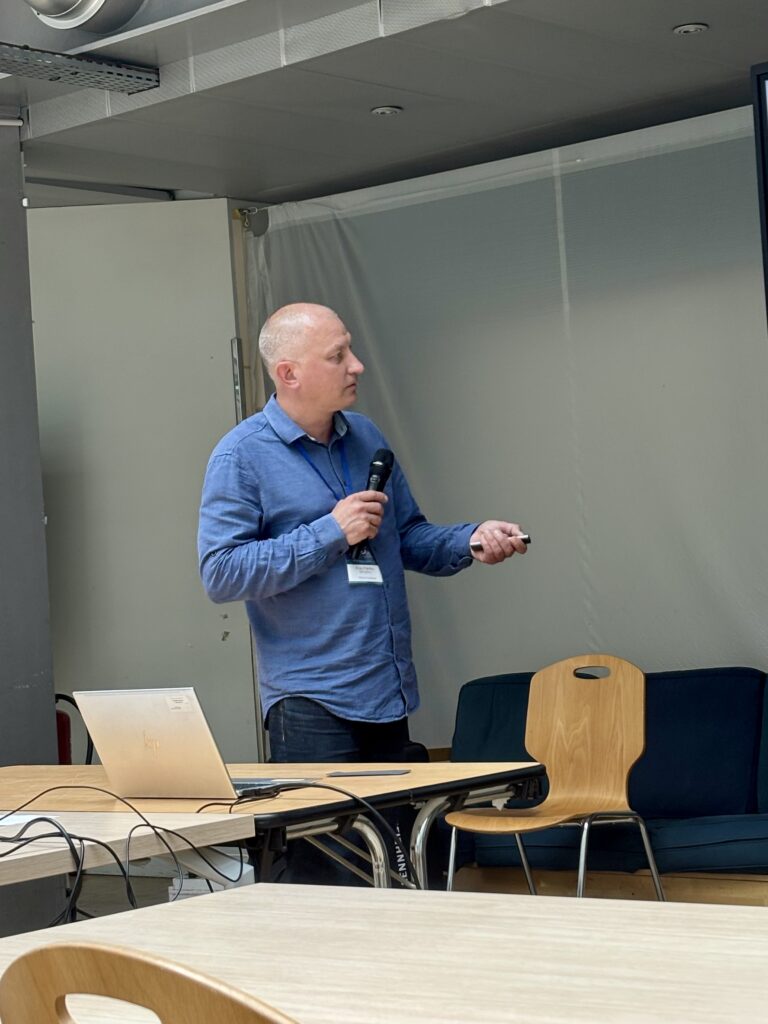
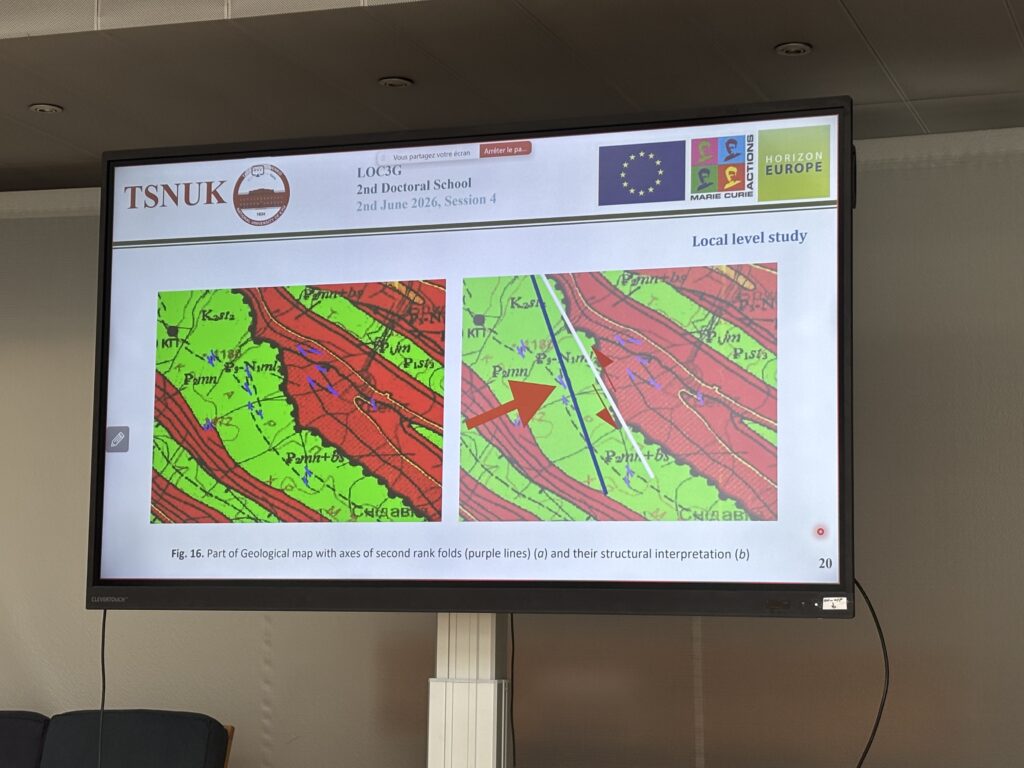
Structural and geophysical investigations of thrust zones in the Carpathians.
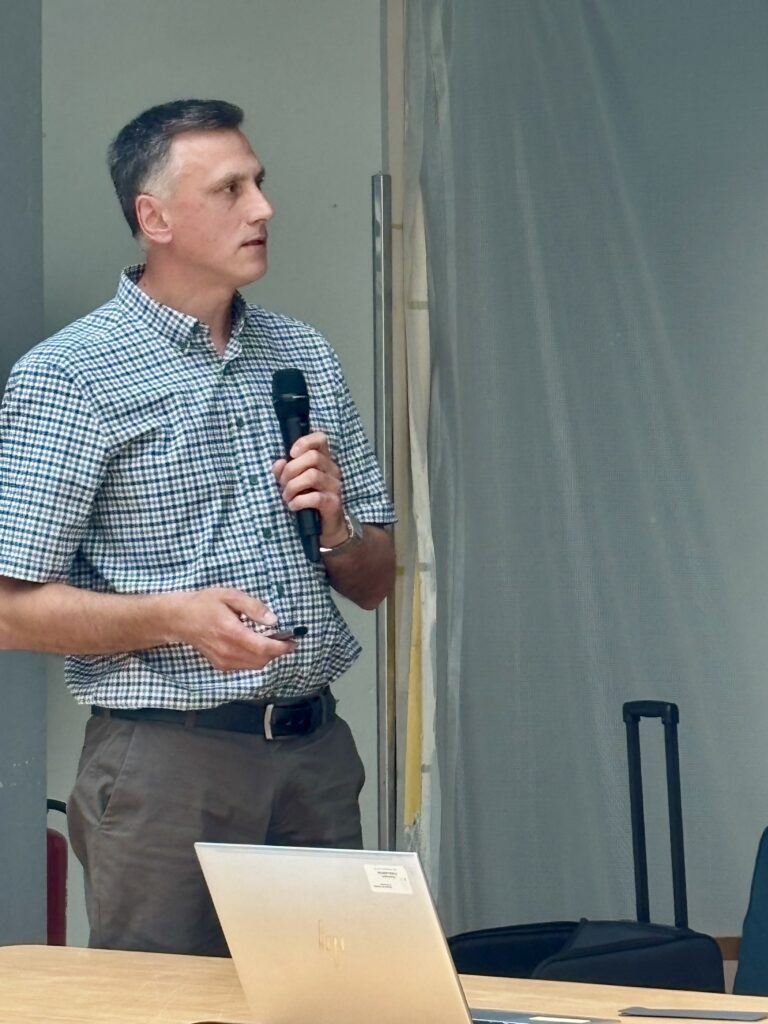
The next scientific lecture of the second day was delivered by Dr. Emad Jahangir from Mines Paris-PSL. His presentation, entitled “Geomechanics for geothermal applications,” focused on geomechanical challenges associated with geothermal energy systems. The talk discussed closed-loop geothermal concepts, drilling technologies, and reservoir-scale considerations, highlighting the important role of geomechanics in improving the feasibility, safety, and efficiency of geothermal energy development.
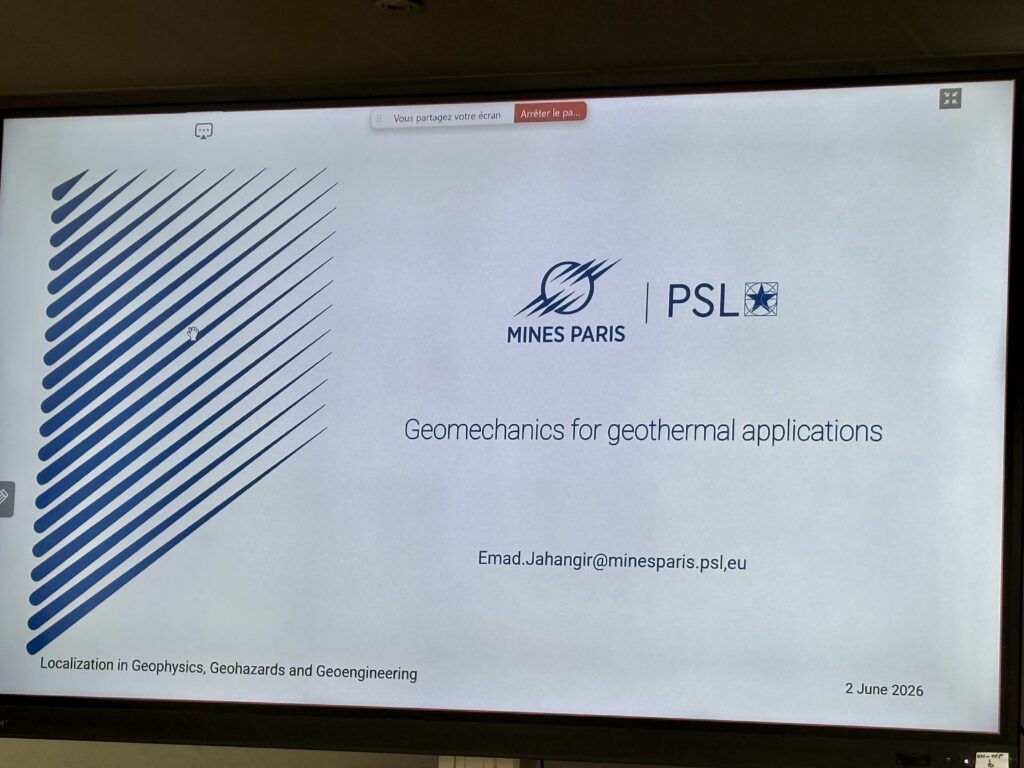
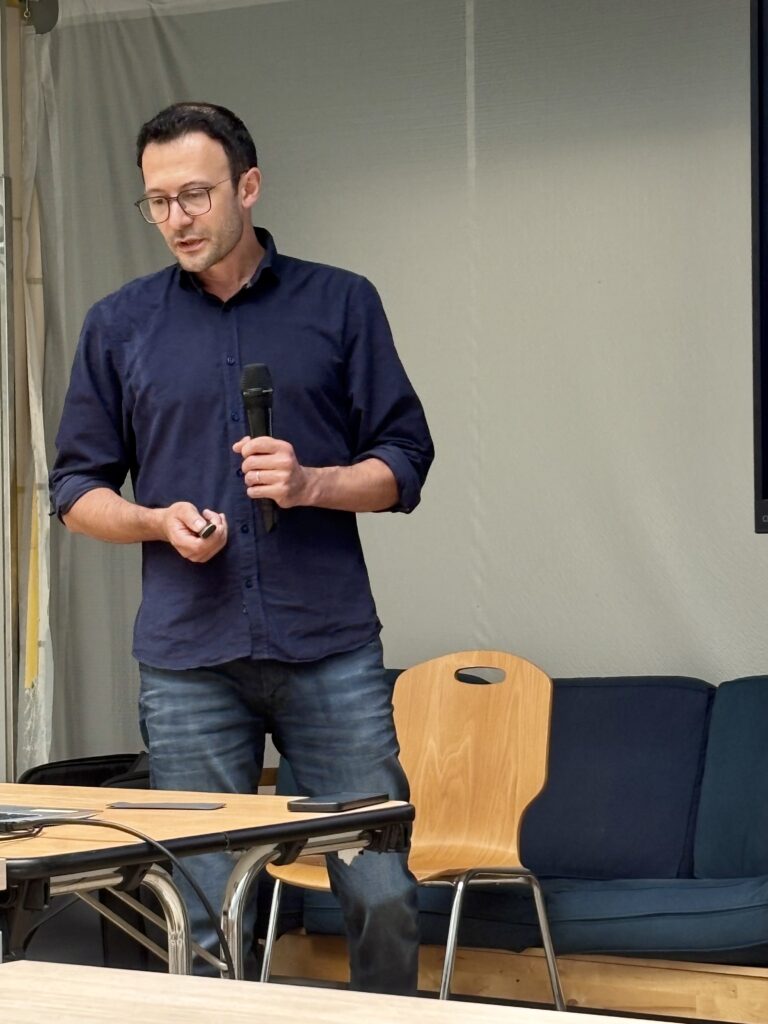
Geomechanical aspects of geothermal applications.
The final lecture was given by Dr. Ana Loyola from Laboratoire Navier, entitled “Towards a screening procedure for depleted gas fields for Underground Hydrogen Storage based on geological and operational criteria.” Her presentation addressed the potential use of depleted gas fields for underground hydrogen storage. The lecture discussed geological and operational criteria that need to be considered when evaluating site suitability, contributing to broader discussions on subsurface energy storage and the energy transition.
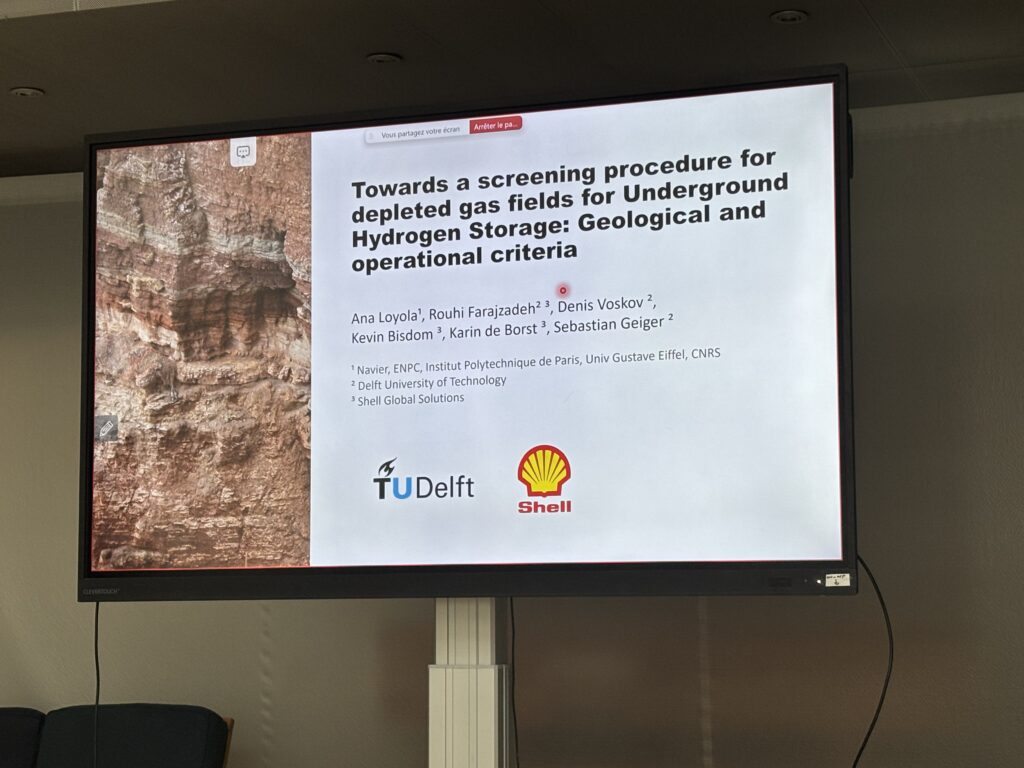
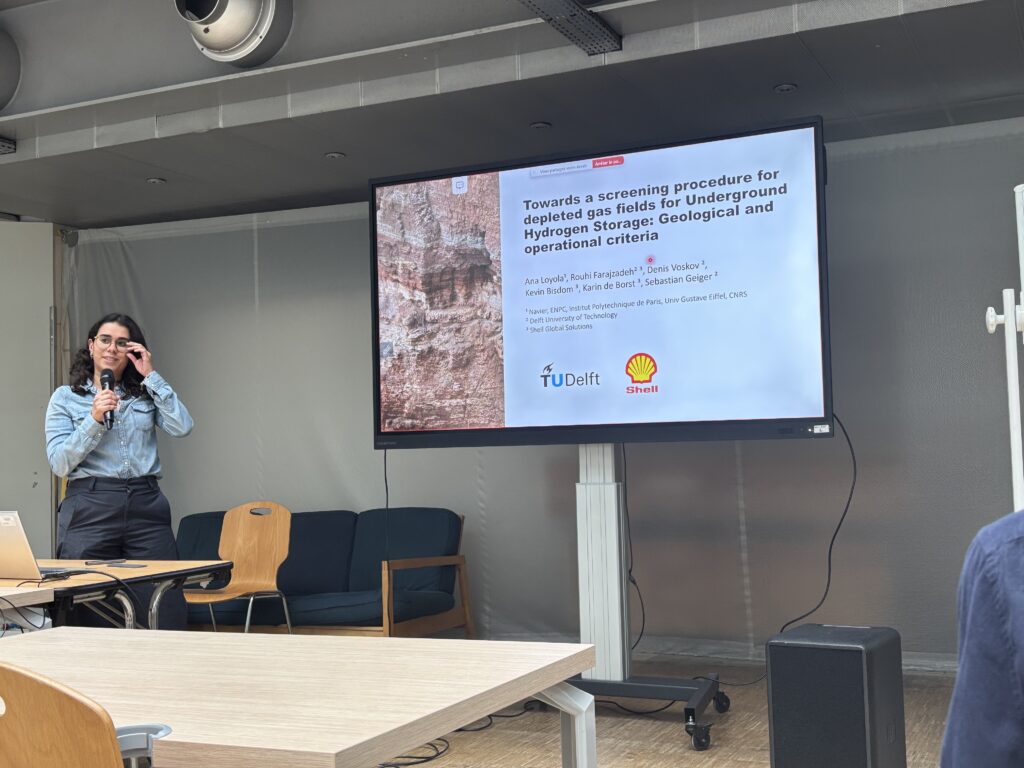
Geological and operational criteria for underground hydrogen storage in depleted gas fields.
4. Third Day of the Doctoral School
4.1 Invited Lectures
The morning session began with a lecture by Dr. Harsha S. Bhat from ENS Paris, entitled “Fault volume digital twin to reproduce the full slip spectrum, scaling and statistical laws.” His presentation focused on the mechanics and energy cycle of fault systems, emphasizing how localized strain volumes can accommodate and dissipate energy across different spatial and temporal scales. The lecture introduced the concept of a fault volume digital twin as a modelling framework for reproducing different fault-slip behaviours, including creep, slow-slip events, tremor, and earthquakes.
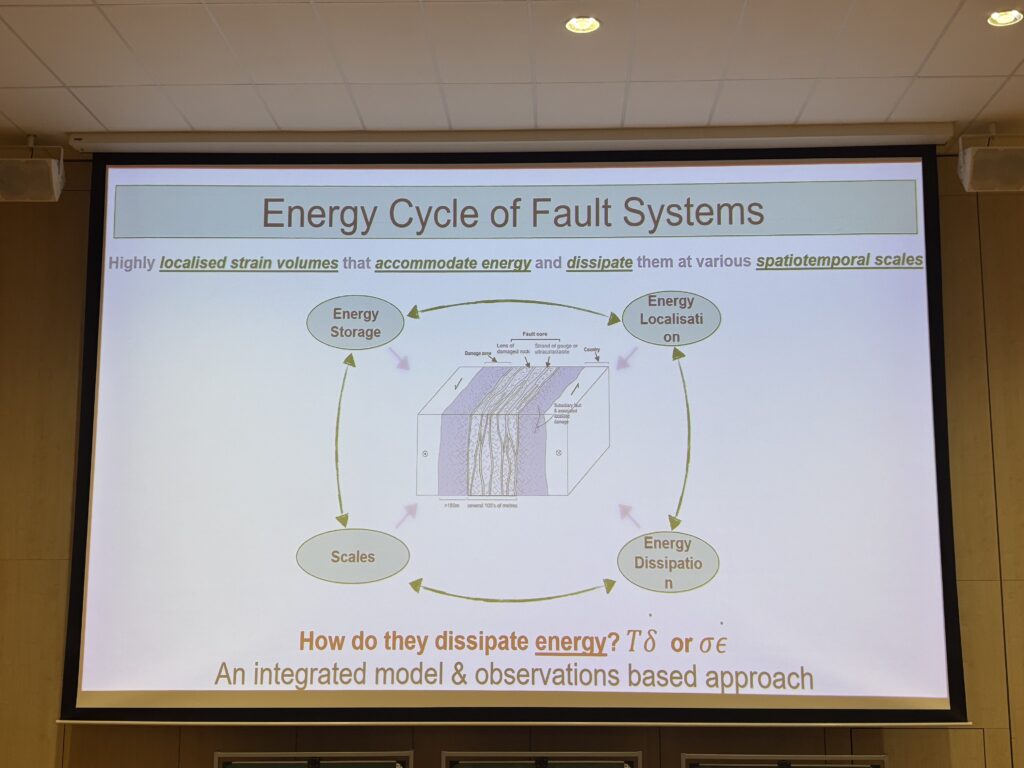
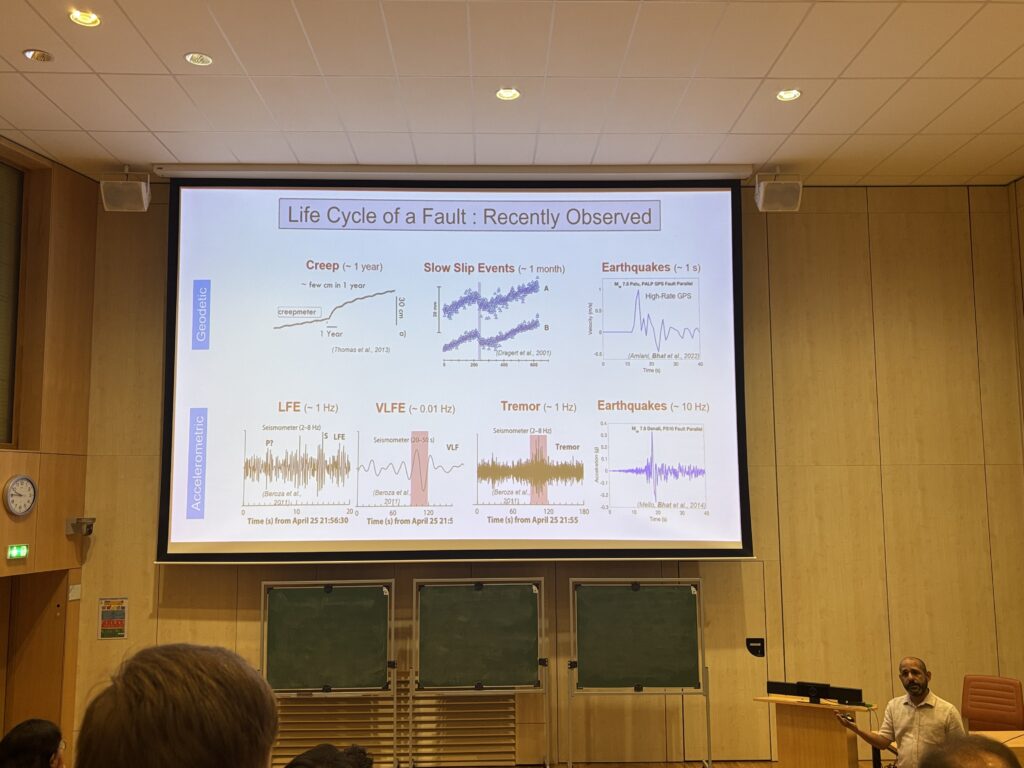
Fault-volume digital-twin approach for understanding the full slip spectrum of fault systems.
The following lecture was delivered online by Prof. Dr. Michael Z. Hou from TU Clausthal, entitled “An Innovative Concept of Regenerative Enhanced Geothermal Systems for Heat and Electricity Production as well as Energy Storage.” His presentation addressed the challenges of conventional enhanced geothermal systems, including limited heat-exchange areas, high drilling costs, induced seismicity, and relatively short project lifetimes. The lecture introduced an innovative regenerative geothermal concept aimed at improving heat extraction efficiency, supporting energy storage, and controlling induced seismic risks through optimized stimulation strategies and predictive monitoring.
In addition to his lecture on regenerative enhanced geothermal systems, Prof. Dr. Michael Z. Hou also introduced the journal Carbon Neutral Systems. The journal focuses on topics related to sustainable energy systems, efficient utilization of raw materials and resources, sustainable materials and processes, digitalization and artificial intelligence for a carbon-neutral society, and carbon-neutral and circular-economy development. He highlighted the journal as a platform for interdisciplinary research supporting the global transition toward carbon neutrality. The introduction also provided participants with useful information on publication opportunities in emerging fields related to energy systems, geomechanics, resource engineering, and sustainable technologies.
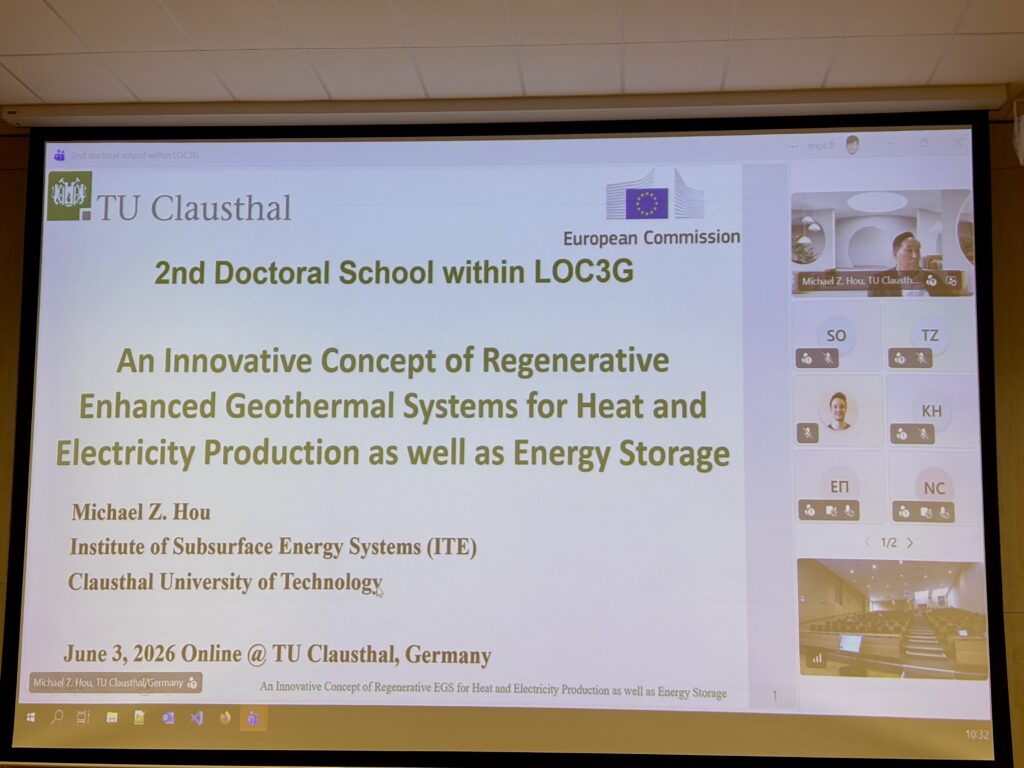
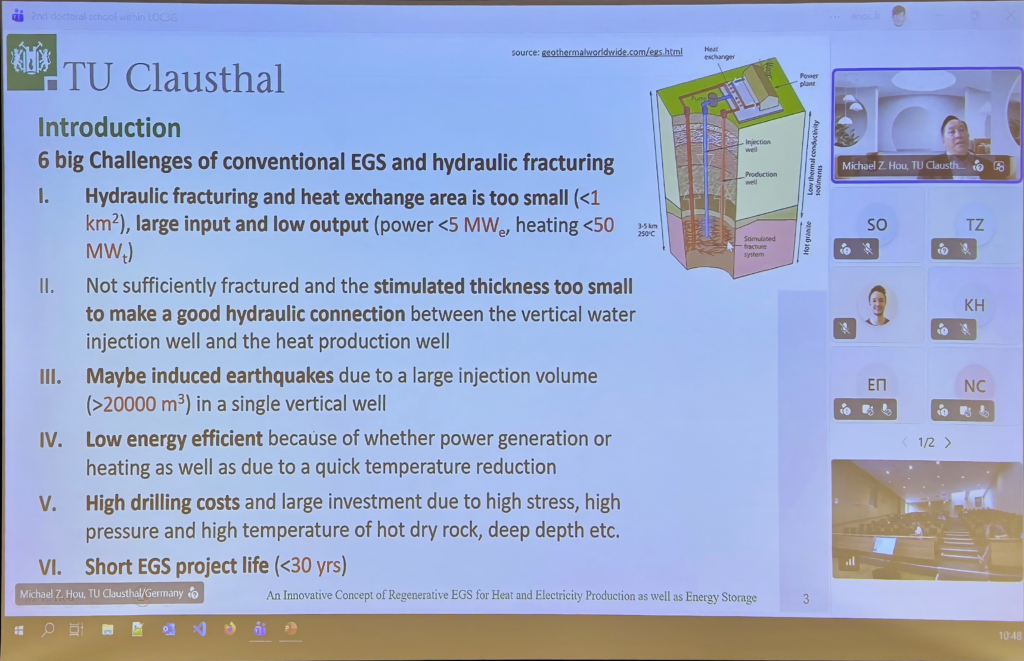
Regenerative enhanced geothermal systems for heat production, electricity generation, and energy storage.
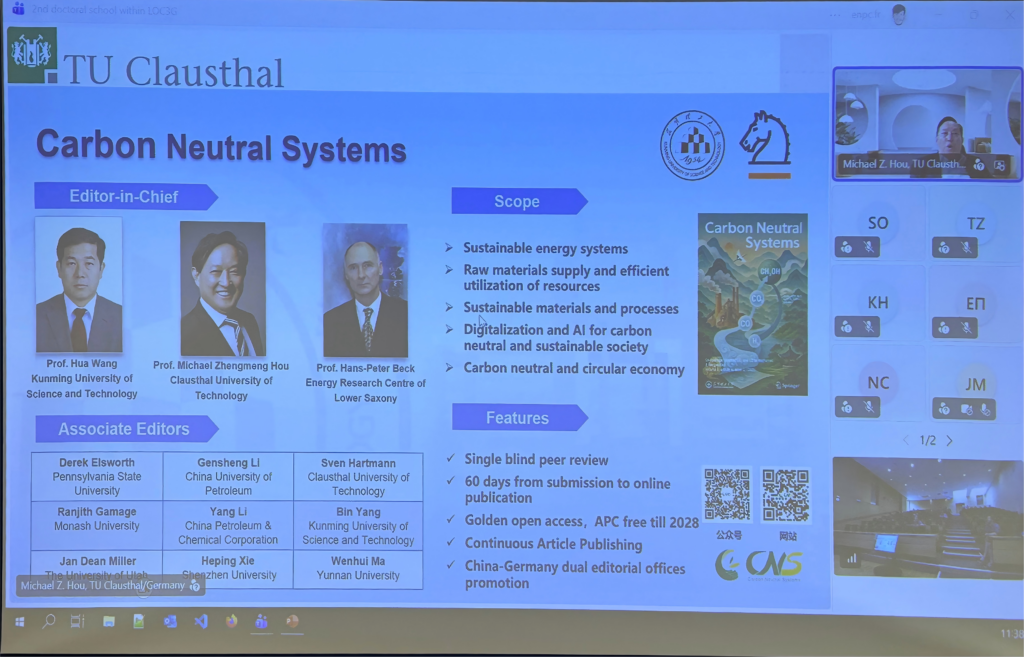
Introduction of the journal Carbon Neutral Systems and its scope related to sustainable energy and carbon-neutral technologies.
The final scientific lecture was given by Dr. Kianoosh Taghizadeh from Laboratoire Navier, entitled “From Elasticity to Plasticity in Granular Materials: An Experimental and Computational Overview.” His presentation focused on the transition from elastic response to plastic deformation in granular materials. The lecture introduced key concepts such as dynamic heterogeneity, particle rearrangement, contact mechanics, and the discrete element method. By combining experimental observations and numerical simulations, the presentation provided a micromechanical perspective on how granular packings evolve from small-strain elastic behaviour to irreversible deformation.
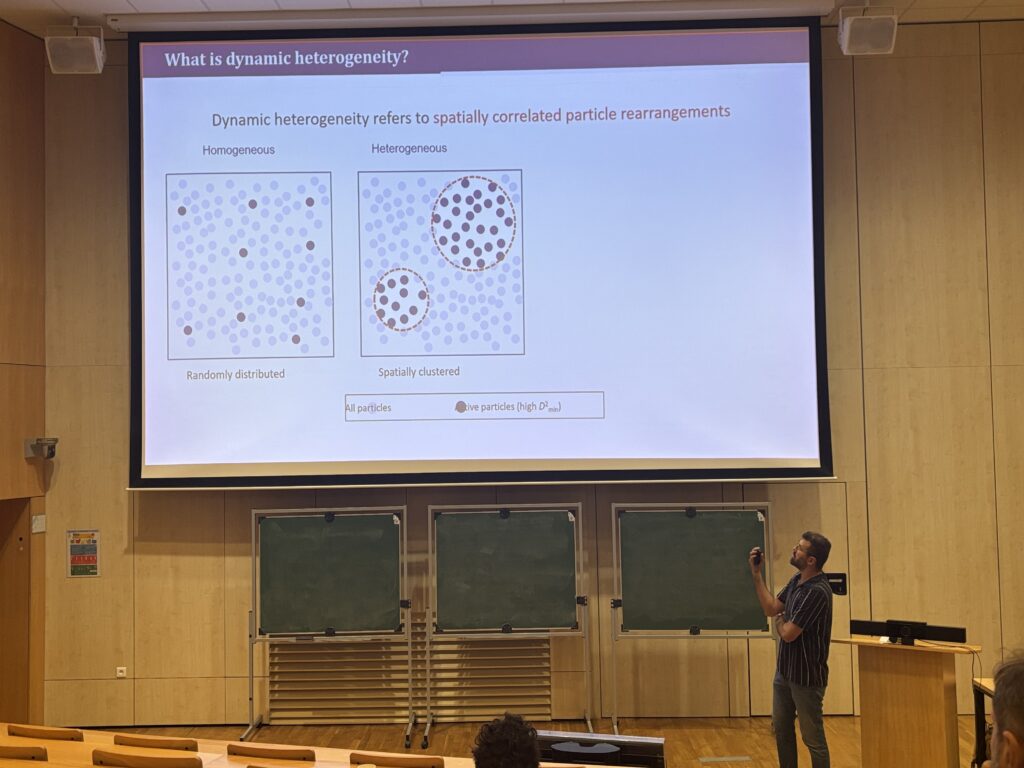
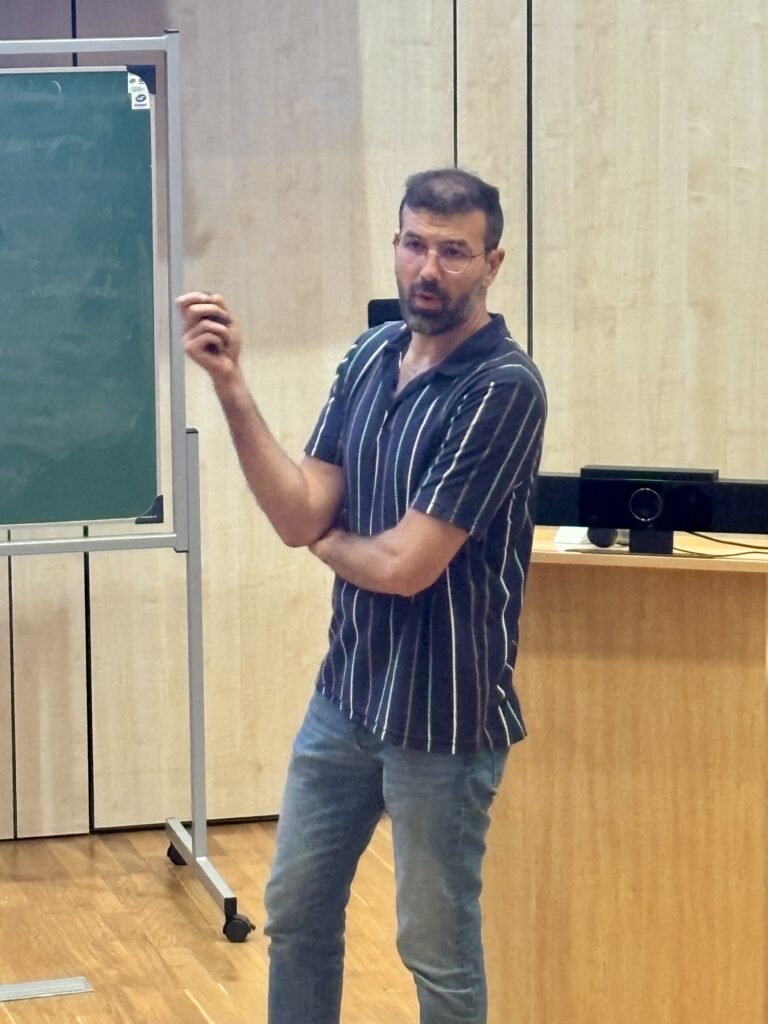
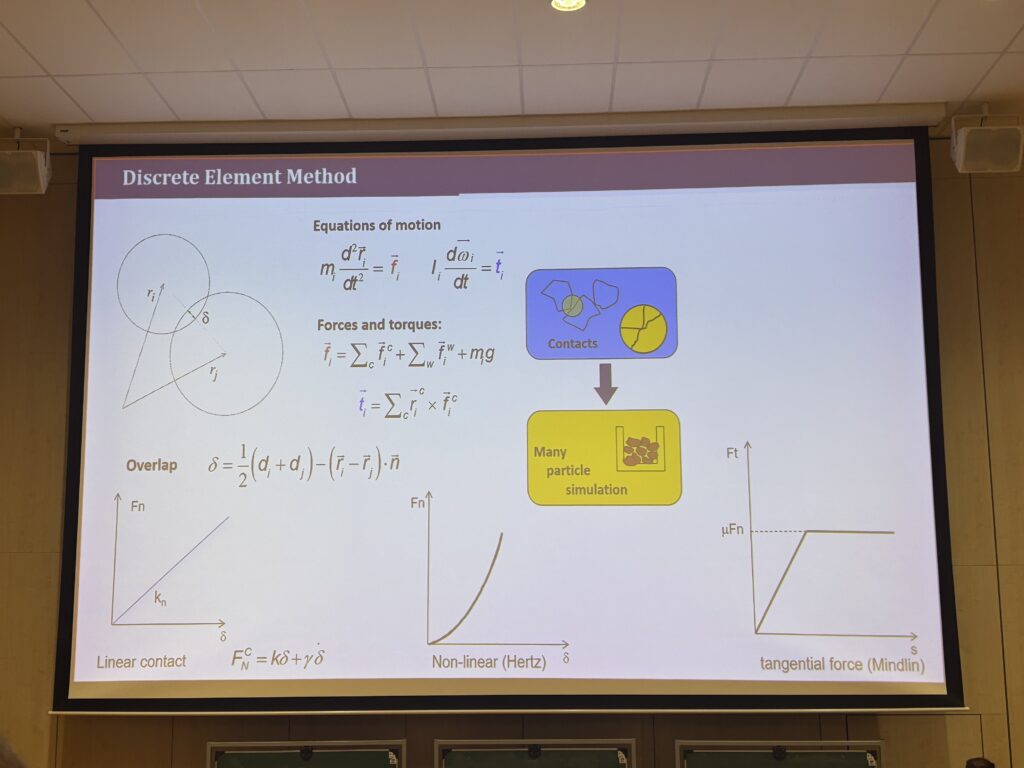
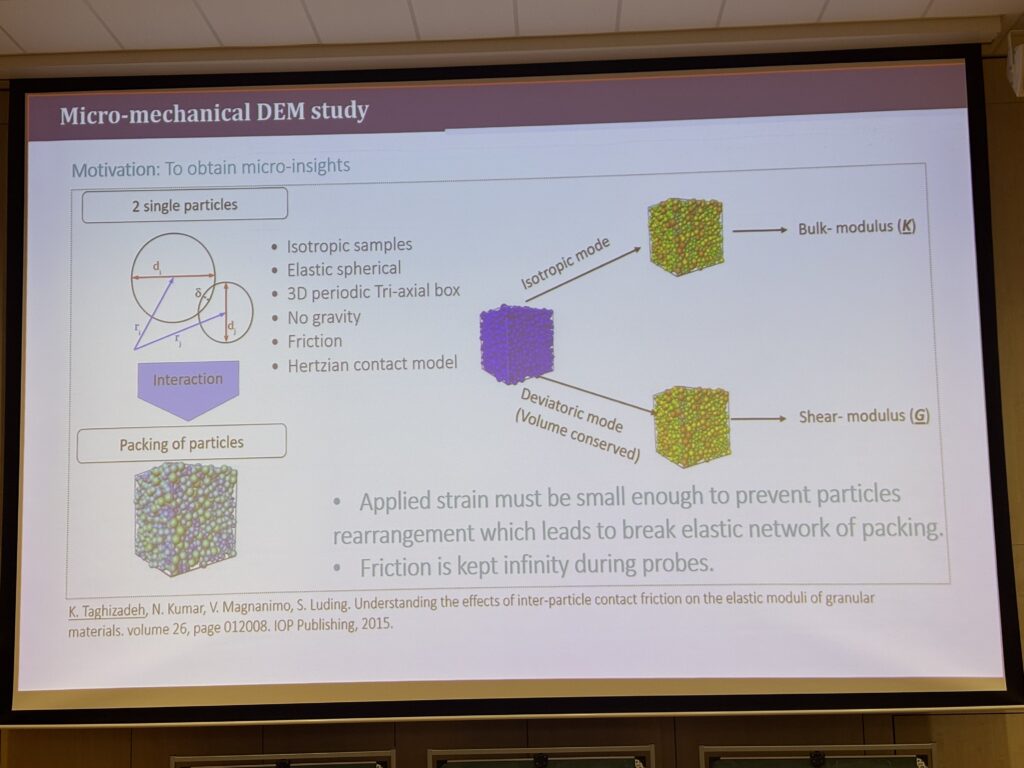
Experimental and computational approaches for understanding elastic–plastic behaviour in granular materials.
4.2 Laboratory Visit
After the scientific lectures, participants joined a laboratory visit, which formed an important practical component of the doctoral school. During the visit, researchers introduced several experimental facilities related to geomechanics, geomaterials, coupled hydro-mechanical behaviour, underground storage, and large-scale physical modelling. The laboratory tour allowed participants to better understand how the theoretical and computational topics discussed during the lectures are connected with experimental observation and testing.
Participants were introduced to experimental devices used for studying soil and rock behaviour under controlled mechanical, hydraulic, and environmental conditions. The visit included explanations of sample preparation, testing procedures, monitoring systems, and data acquisition methods. These demonstrations helped doctoral candidates gain a more direct understanding of laboratory-based research methods in geomechanics.
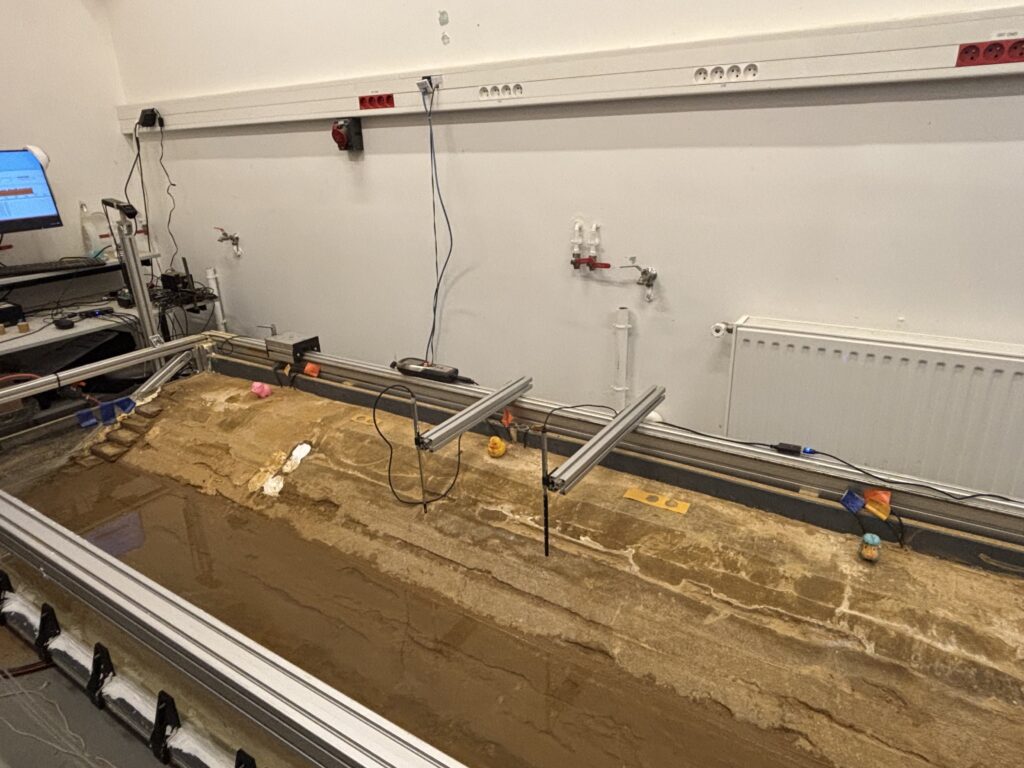
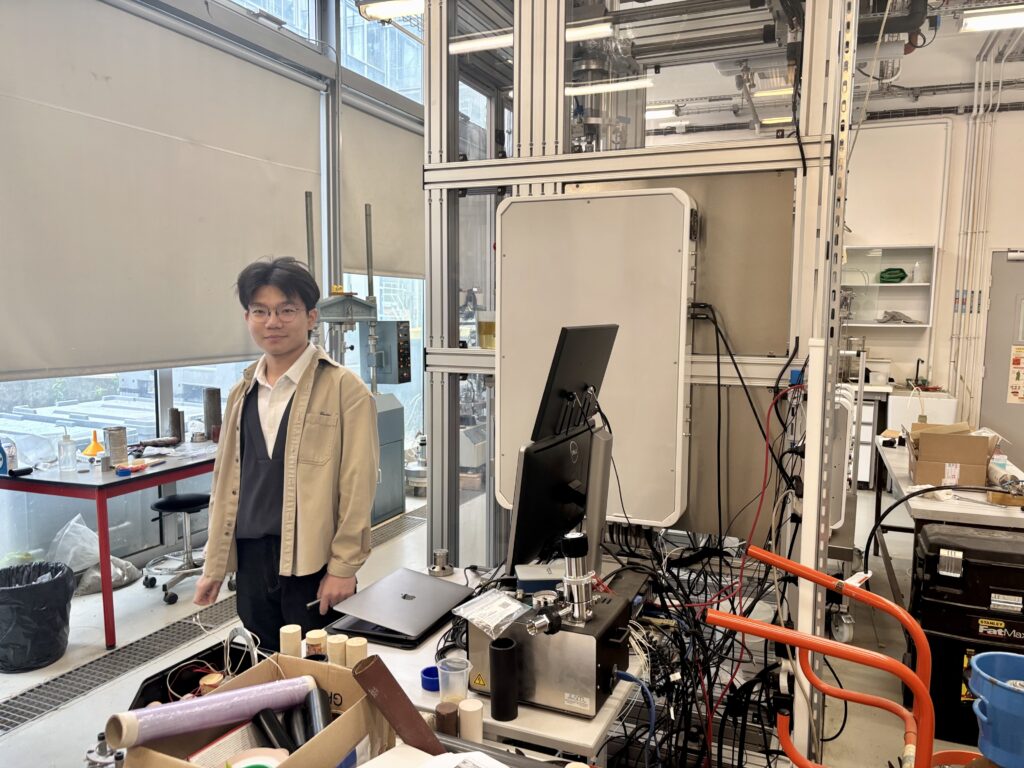
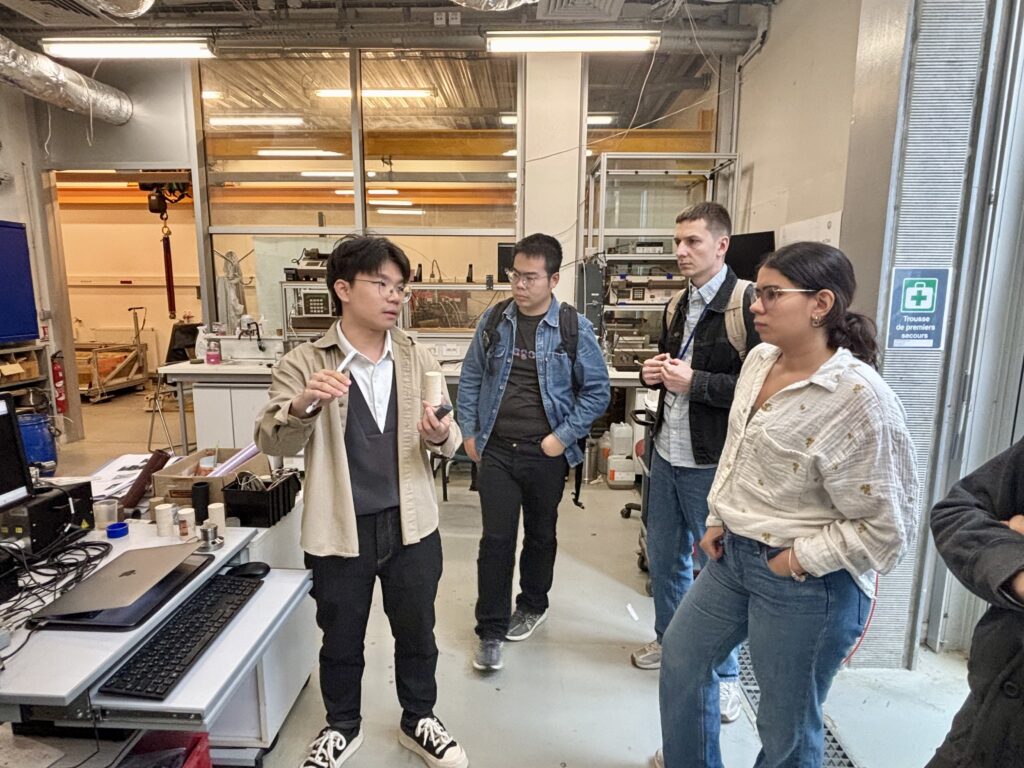
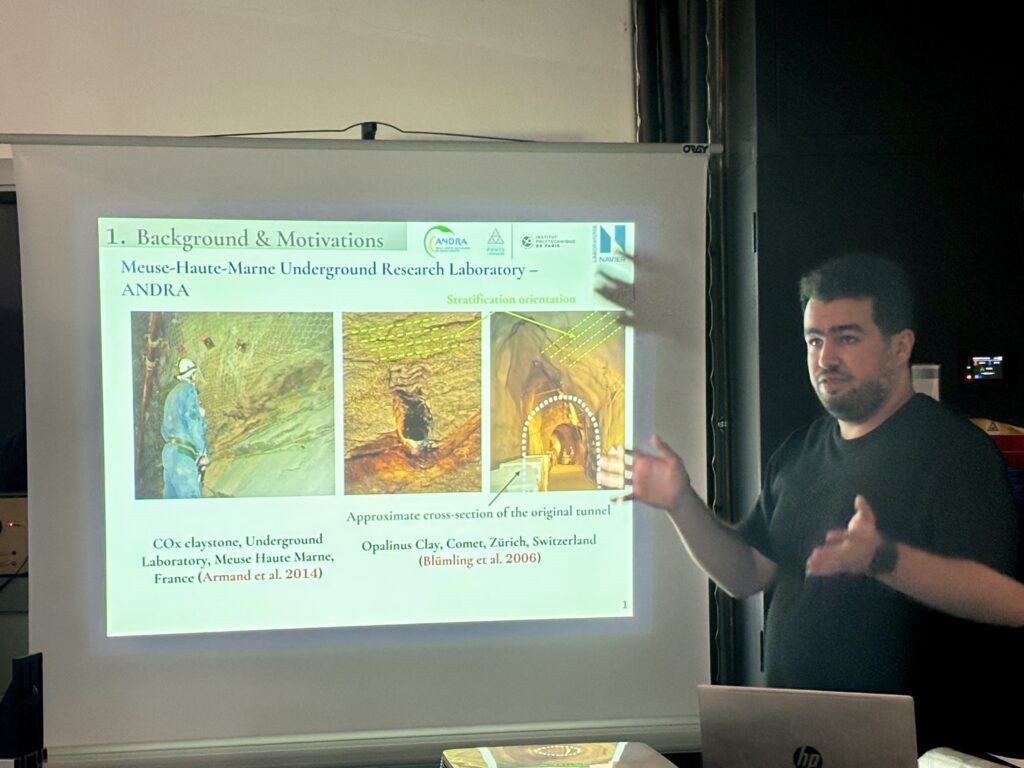
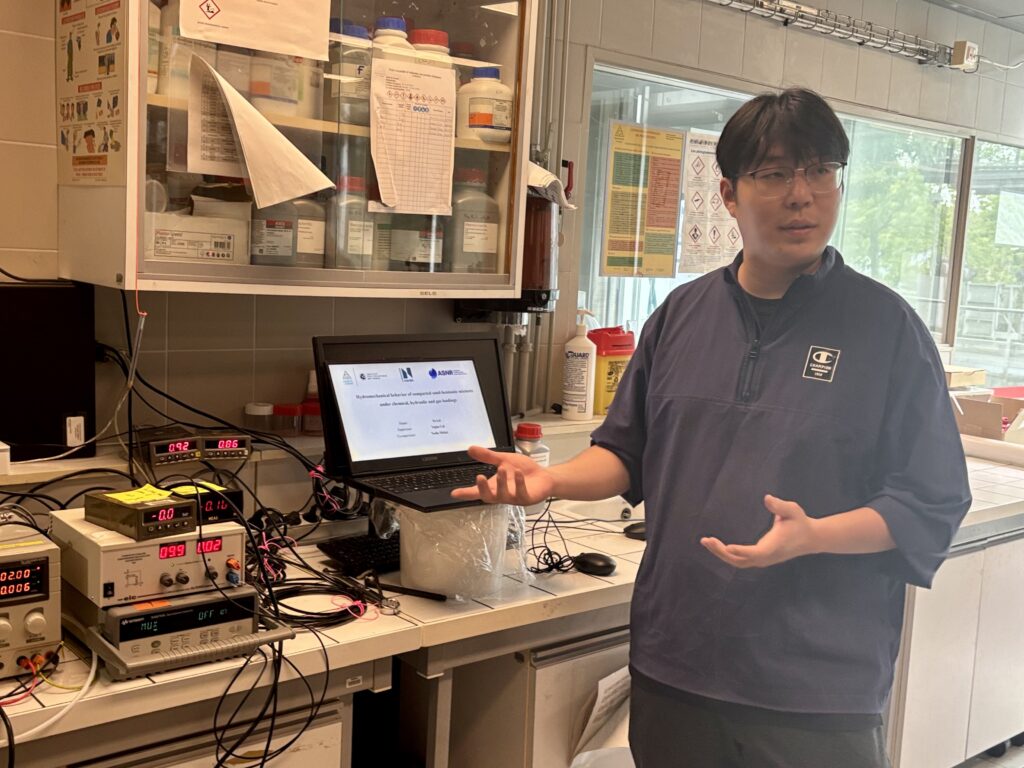
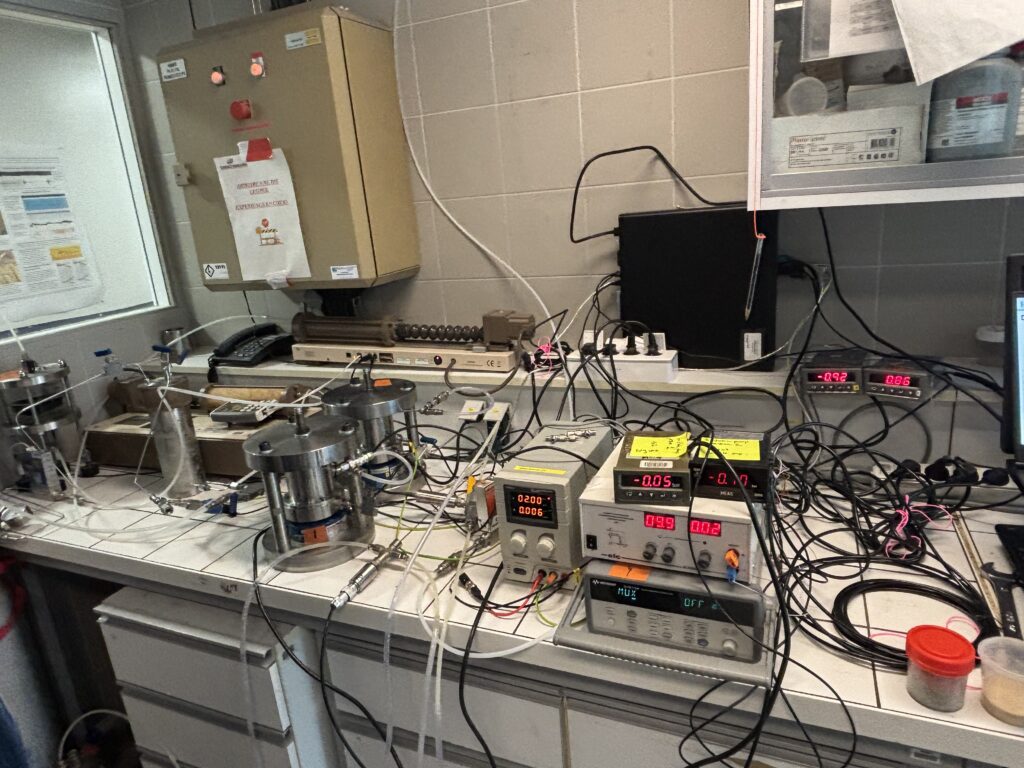
Participants learning about advanced geomechanical testing facilities.
The laboratory visit also included discussions on porous materials, coupled processes, and underground engineering applications. Demonstrations of testing equipment and material samples encouraged active questions and exchanges between participants and laboratory researchers. This hands-on component provided a valuable opportunity to connect experimental evidence with modelling approaches presented throughout the doctoral school.
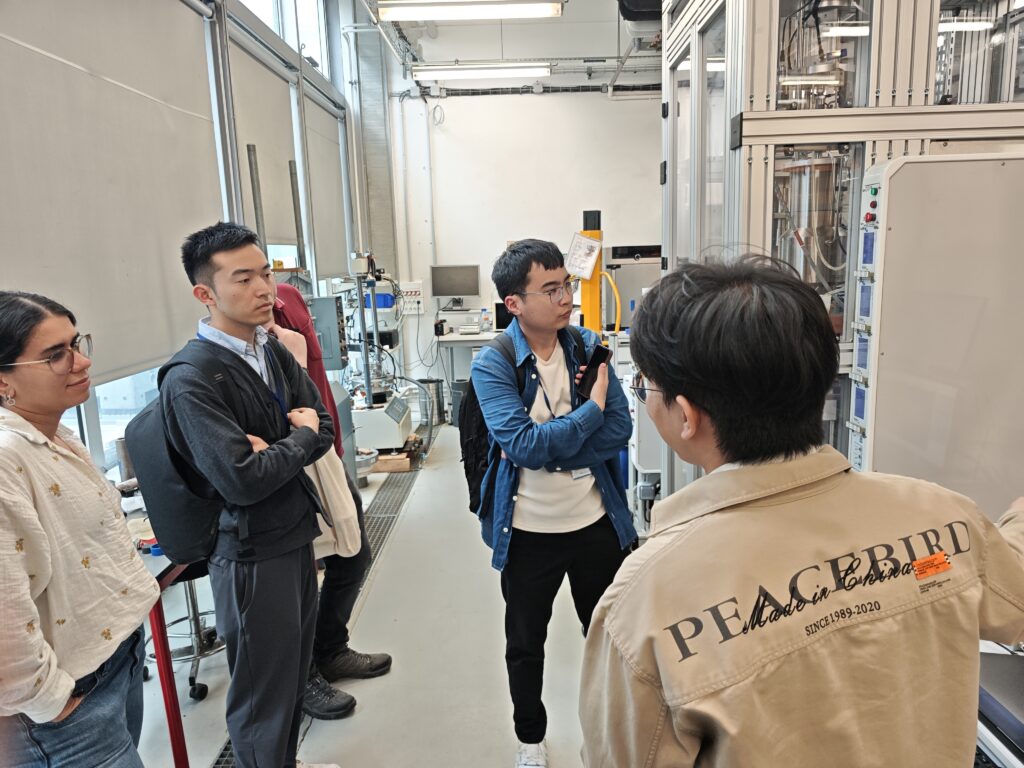
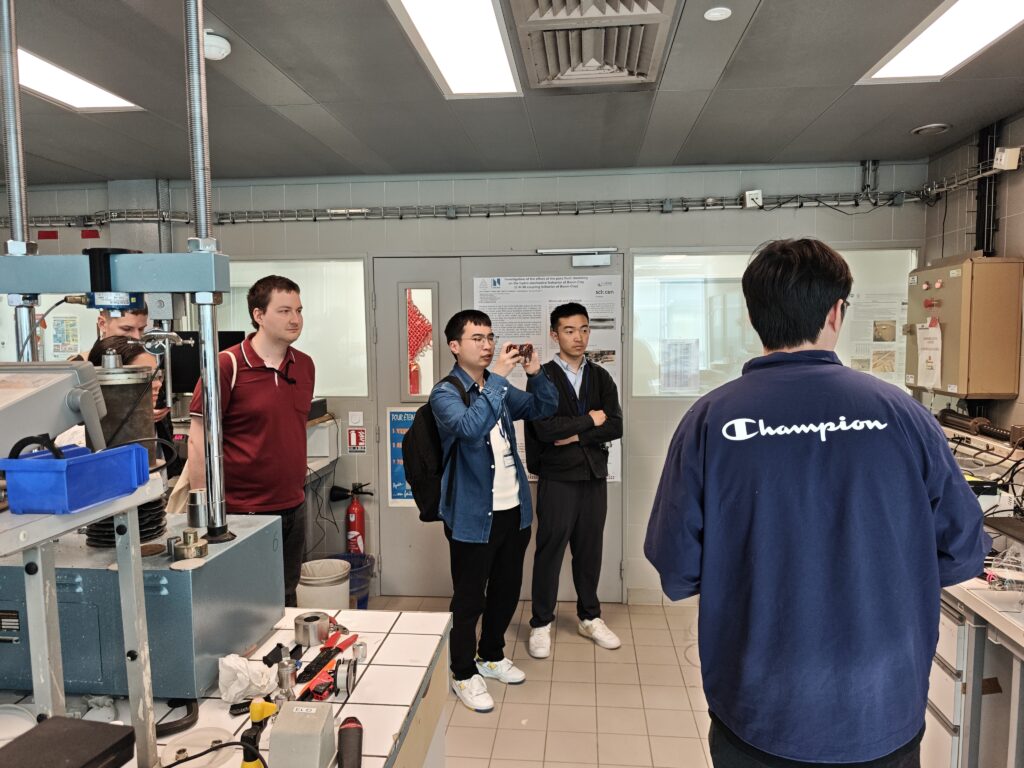
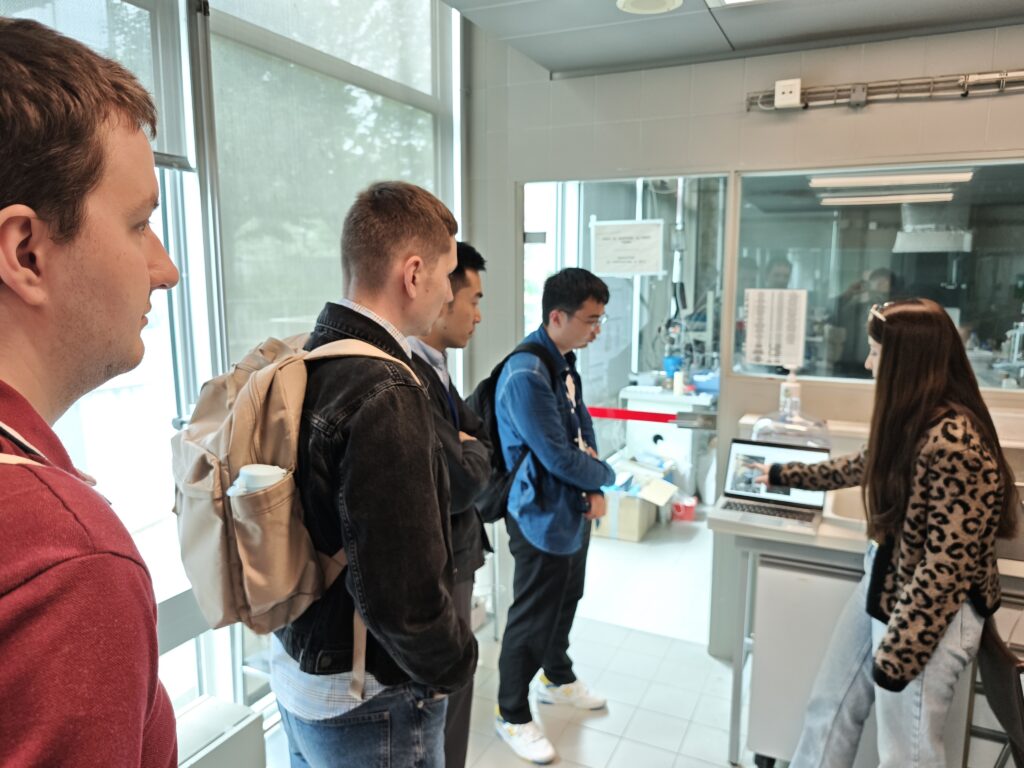
Discussion of material samples and experimental procedures during the laboratory visit.
5. Concluding Remarks
The 2nd LOC3G Doctoral School concluded after three days of lectures, discussions, poster presentations, networking activities, and laboratory visits. The event provided doctoral candidates and researchers with valuable training on localization, damage, fracture, geohazards, subsurface energy systems, and advanced geomechanical modelling. It also strengthened scientific exchange and collaboration among the LOC3G partners, supporting the project’s broader objectives in interdisciplinary doctoral training and international research cooperation.

Group photo of 2nd LOC3G doctoral school